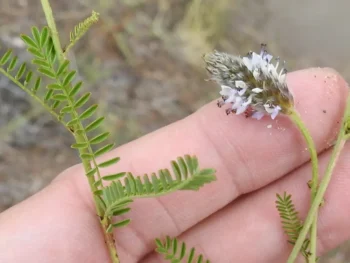
Foxtail Prairie Clover: A Charming Native Annual for Your Garden
If you’re looking for a delightful native plant that brings both charm and ecological benefits to your garden, let me introduce you to foxtail prairie clover (Dalea leporina). This sweet little annual might not be the showiest plant in your garden, but it packs a punch when it comes to supporting pollinators and adding texture to naturalized spaces.
What Is Foxtail Prairie Clover?
Foxtail prairie clover is a native annual forb that belongs to the legume family. As an annual, it completes its entire life cycle in one growing season, but don’t let that fool you into thinking it’s not worth planting. This hardy little plant has been gracing North American prairies for centuries and deserves a spot in modern native gardens.
The plant gets its common name from its distinctive flower spikes that look remarkably like tiny foxtails. These fuzzy, cylindrical blooms typically appear in white to pale purple and create an almost whimsical texture in the garden landscape.
Where Does It Grow Naturally?
This prairie native has quite an impressive range across the United States. You’ll find foxtail prairie clover growing naturally in Alabama, Arizona, Colorado, Illinois, Indiana, Iowa, Kansas, Massachusetts, Michigan, Minnesota, Missouri, Nebraska, New Mexico, North Dakota, Ohio, Pennsylvania, South Dakota, Tennessee, Texas, Virginia, and Wisconsin. That’s quite a distribution for one little plant!
- Species observed
- No observations
Why Plant Foxtail Prairie Clover?
There are several compelling reasons to consider adding this native annual to your garden:
- Pollinator magnet: The small flowers attract bees, butterflies, and other beneficial insects
- Low maintenance: Once established, it requires minimal care
- Drought tolerant: Perfect for water-wise gardening
- Self-seeding: Will naturalize in suitable conditions
- Native heritage: Supports local ecosystems and wildlife
Garden Design Ideas
Foxtail prairie clover shines in several garden settings:
- Prairie gardens: A natural fit for authentic prairie restorations
- Wildflower meadows: Adds texture and supports biodiversity
- Xeriscaping: Excellent choice for low-water landscapes
- Naturalized areas: Perfect for letting parts of your yard go wild
- Pollinator gardens: Provides nectar for beneficial insects
Growing Conditions and Care
The beauty of foxtail prairie clover lies in its adaptability and low-maintenance nature. Here’s what you need to know:
Sunlight: Prefers full sun for best growth and flowering
Soil: Thrives in well-drained soils and can handle both sandy and clay conditions
Water: Drought tolerant once established; actually prefers drier conditions
Hardiness: Suitable for USDA zones 3-9
Planting and Propagation Tips
Getting foxtail prairie clover established in your garden is surprisingly straightforward:
- Direct seeding: Sow seeds directly in fall or early spring
- Soil preparation: Light cultivation is all that’s needed
- Spacing: Allow seeds to naturalize rather than formal spacing
- Watering: Water lightly until germination, then reduce as plants establish
- Maintenance: Virtually none required once established
Special Considerations
It’s worth noting that foxtail prairie clover has different wetland preferences across regions. In most areas, it’s classified as an upland plant that rarely occurs in wetlands. However, in the Midwest region, it can occasionally be found in wetter conditions. This flexibility makes it adaptable to various garden microclimates.
The Bottom Line
Foxtail prairie clover may not be the flashiest plant in your garden, but it offers something special: authentic native character with minimal fuss. If you’re working on a prairie restoration, creating a pollinator haven, or simply want to support native biodiversity, this charming annual deserves serious consideration. Its ability to self-seed means you might just find delightful surprises popping up in your garden year after year, creating natural drifts of those distinctive foxtail blooms.
For native plant enthusiasts and anyone interested in low-maintenance gardening with ecological benefits, foxtail prairie clover proves that sometimes the most humble plants make the biggest difference.