Fragrant Bedstraw: A Sweet-Scented Native Groundcover
If you’re looking for a delicate, sweet-smelling native plant to fill those tricky shady spots in your garden, fragrant bedstraw (Galium triflorum) might just be your new best friend. This charming perennial herb brings a subtle elegance to woodland gardens and naturalized areas across North America.
What Is Fragrant Bedstraw?
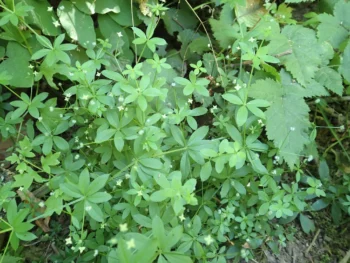
Fragrant bedstraw is a native North American perennial that belongs to the coffee family. True to its name, this little beauty releases a lovely sweet fragrance, especially when its leaves are crushed or bruised. As a forb herb, it lacks woody stems but makes up for it with its delicate, whorled leaves and tiny white flowers that appear in clusters of three.
You might also see this plant listed under several botanical synonyms, including Galium brachiatum, Galium pennsylvanicum, and various varieties of Galium triflorum, but they all refer to the same sweet-scented species.
Where Does It Grow Naturally?
Talk about a well-traveled native! Fragrant bedstraw is impressively widespread, calling home to an enormous range across North America. You’ll find it native throughout all of the lower 48 states, Alaska, and most of Canada, from Alberta to Newfoundland. It even extends its range into St. Pierre and Miquelon, though it appears to be introduced rather than native in Greenland.
- Species observed
- No observations
Why Consider Fragrant Bedstraw for Your Garden?
Here’s why this unassuming native might deserve a spot in your landscape:
- Low maintenance: As a native perennial, it’s adapted to local conditions and requires minimal care once established
- Versatile placement: Thrives in partial shade to full shade, perfect for those challenging spots under trees
- Pleasant fragrance: Adds a sweet scent to your garden, especially noticeable when walking through planted areas
- Pollinator friendly: Attracts small pollinators like flies and tiny bees with its delicate white flowers
- Moisture flexible: Can handle both wetland and upland conditions, making it adaptable to various garden situations
Garden Design Ideas
Fragrant bedstraw works beautifully as a groundcover in woodland gardens, shade gardens, and native plant landscapes. Its delicate texture and subtle presence make it an excellent companion plant that won’t compete with showier woodland wildflowers. Consider using it to fill in gaps between larger native plants or to create a naturalized carpet under trees.
Growing Conditions and Care
One of the best things about fragrant bedstraw is how easygoing it is. This adaptable native can handle a wide range of conditions:
- Light: Partial shade to full shade (though it can tolerate some morning sun)
- Moisture: Adaptable from moist to medium-dry conditions
- Soil: Not particularly picky about soil type
- Hardiness: Suitable for USDA zones 2-9, covering most of North America
Planting and Maintenance Tips
Getting fragrant bedstraw established in your garden is refreshingly straightforward:
- Plant in spring or fall when temperatures are moderate
- Space plants about 12-18 inches apart if you’re looking for groundcover coverage
- Water regularly during the first growing season to help establish roots
- Once established, it’s quite drought tolerant and needs minimal supplemental watering
- This plant may self-seed, so you might find new plants appearing in suitable spots
- No fertilizer needed – native plants prefer to grow in natural soil conditions
A Few Things to Consider
While fragrant bedstraw is generally well-behaved, it can spread through self-seeding. This isn’t necessarily a problem in naturalized areas, but you might want to remove seed heads if you prefer to control its spread in more formal garden settings.
The plant’s delicate appearance means it’s best suited for areas where it won’t be trampled or overwhelmed by more aggressive plants.
The Bottom Line
Fragrant bedstraw offers native gardeners a lovely, low-maintenance option for shady areas. Its sweet fragrance, adaptability, and wildlife benefits make it a worthy addition to woodland gardens and naturalized landscapes. Plus, knowing you’re supporting local ecosystems with a truly native species adds an extra layer of satisfaction to your gardening efforts.
If you’re building a native plant garden or looking to add subtle charm to your shaded areas, fragrant bedstraw deserves serious consideration. Sometimes the most understated plants make the biggest difference in creating a thriving, authentic native landscape.