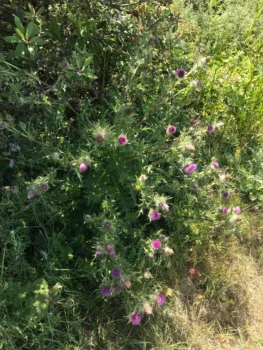
Franciscan Thistle: A Rare California Native Worth Protecting in Your Garden
Meet the Franciscan thistle, a stunning yet endangered native plant that embodies the wild beauty of California’s coastal landscapes. This remarkable species, scientifically known as Cirsium andrewsii, represents both an opportunity and a responsibility for native plant gardeners.
A True California Native
The Franciscan thistle is as Californian as it gets – this biennial to perennial forb is native to the lower 48 states and grows exclusively in California. You’ll find its natural habitat concentrated in the San Francisco Bay Area and central coastal regions, where it has adapted to the unique Mediterranean climate and coastal conditions.
- Species observed
- No observations
Why This Plant Matters (And Why You Should Care)
Here’s where things get serious: the Franciscan thistle has a Global Conservation Status of S2, meaning it’s imperiled. With typically only 6 to 20 occurrences remaining and possibly just 1,000 to 3,000 individual plants left in the wild, this species is dancing on the edge of extinction. That makes every garden specimen potentially crucial for conservation.
Garden Appeal: Beauty Meets Purpose
Don’t let the word thistle fool you into thinking this is just a spiky troublemaker. The Franciscan thistle offers genuine garden appeal with its purple-pink flowers that bloom atop sturdy stems reaching 3 to 6 feet tall. As a forb (that’s botanist-speak for a herbaceous flowering plant), it lacks woody stems but makes up for it with dramatic presence and excellent pollinator value.
The plant’s spiny leaves and robust form make it an excellent accent plant in native California gardens, wildlife gardens, and coastal landscape designs. It’s particularly striking when planted in groups or allowed to naturalize in appropriate settings.
Pollinator Paradise
Here’s where the Franciscan thistle really shines: its nectar-rich flowers are magnets for butterflies, bees, and other pollinators. In an era when pollinator populations are struggling, adding this native species to your garden provides crucial habitat and food resources for local wildlife.
Growing Conditions and Care
The good news? Once established, Franciscan thistle is relatively low-maintenance and well-adapted to California’s climate:
- Sunlight: Full sun to partial shade
- Soil: Well-drained soils (it’s quite adaptable to different soil types)
- Water: Drought tolerant once established, though benefits from occasional deep watering
- Climate: USDA hardiness zones 8-10
- Wetland tolerance: Facultative – can handle both wet and dry conditions
Planting and Propagation Tips
The best approach for establishing Franciscan thistle is direct seeding in fall, which mimics natural germination patterns. Once your plants are established, they may self-seed if conditions are favorable, helping to create a sustainable population in your garden.
As a biennial to perennial species, you can expect plants to live for several years, with some individuals potentially flowering multiple times throughout their lifespan.
The Conservation Imperative
Important: Given this species’ imperiled status, it’s crucial to source plants or seeds only from reputable native plant nurseries that use responsibly collected, legally obtained material. Never collect from wild populations – every plant in nature is precious for the species’ survival.
Consider contacting local native plant societies, botanical gardens, or conservation organizations to learn about seed collection programs or plant swaps that support conservation efforts.
Is Franciscan Thistle Right for Your Garden?
This plant is perfect for gardeners who:
- Want to support California native biodiversity
- Are creating pollinator-friendly landscapes
- Appreciate dramatic, architectural plants
- Live in coastal or central California regions
- Are committed to conservation-minded gardening
However, it might not be the best choice if you’re looking for a compact, highly manicured plant or if you’re gardening outside its natural hardiness zones.
A Living Legacy
By choosing to grow Franciscan thistle responsibly, you’re not just adding a beautiful native plant to your garden – you’re participating in conservation. Every garden that successfully establishes this species creates a genetic repository and potential seed source for future restoration efforts.
In a world where many native plants face uncertain futures, the Franciscan thistle represents both the fragility and resilience of California’s native flora. With thoughtful cultivation and responsible sourcing, your garden can become part of the solution for preserving this remarkable species for future generations.