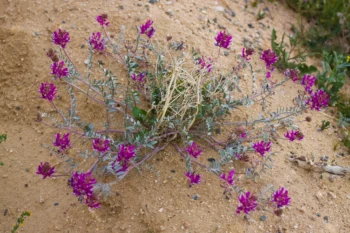
Freckled Milkvetch: A Drought-Tough Native with Nitrogen-Fixing Superpowers
Looking for a low-maintenance native plant that can thrive in tough conditions while actually improving your soil? Meet freckled milkvetch (Astragalus lentiginosus), a hardy biennial that’s been quietly working magic across the western United States and Canada for centuries. This unassuming little powerhouse might just be the perfect addition to your water-wise garden.
What Makes Freckled Milkvetch Special?
Freckled milkvetch is a true western native, naturally growing across an impressive range that includes British Columbia, Arizona, California, Colorado, Idaho, Montana, Nevada, New Mexico, Oregon, Texas, Utah, Washington, and Wyoming. As a member of the legume family, this plant has a special talent: it can actually fix nitrogen in the soil, essentially fertilizing itself and neighboring plants.
- Species observed
- No observations
This biennial typically grows as a low-growing shrub, staying under 1.5 feet tall and never exceeding 3 feet at maturity. Its moderate growth rate and single crown growth form make it an excellent choice for gardeners who want steady, predictable results without aggressive spreading.
Garden Appeal and Landscape Role
Don’t let its modest size fool you – freckled milkvetch brings real visual interest to the garden. In late spring, it produces conspicuous yellow flowers that brighten up the landscape, followed by black seeds that add textural contrast. The medium-textured green foliage provides a nice backdrop throughout the growing season.
This plant shines in several landscape roles:
- Ground cover for naturalistic gardens
- Erosion control on slopes
- Xeriscape and drought-tolerant garden plantings
- Native plant gardens and wildlife habitats
- Low-maintenance landscape areas
Growing Conditions: Tough as Nails
One of freckled milkvetch’s greatest strengths is its adaptability to challenging growing conditions. This plant is remarkably drought tolerant and has low fertility requirements – perfect for gardeners who prefer a hands-off approach.
Soil Requirements:
- Adapts to coarse, medium, and fine-textured soils
- pH range: 5.7 to 7.4
- Medium tolerance for calcium carbonate and salinity
- Minimum root depth of 10 inches
Climate Preferences:
- High drought tolerance with low moisture requirements
- Handles temperatures as low as -28°F (suitable for USDA zones 4-9)
- Needs at least 100 frost-free days
- Annual precipitation range: 10-16 inches
- Full sun (shade intolerant)
Planting and Care Tips
Growing freckled milkvetch is refreshingly straightforward, though you’ll need a bit of patience since it’s not commonly available commercially.
Propagation:
- Seed is the primary propagation method (about 140,000 seeds per pound)
- No cold stratification required
- Expect slow seedling vigor initially
- Seeds are produced in summer with medium abundance
Establishment and Care:
- Plant in full sun locations
- Ensure good drainage – this plant doesn’t tolerate wet conditions
- Minimal fertilization needed due to nitrogen-fixing ability
- Once established, requires very little supplemental water
- No pruning or special maintenance required
Wetland Considerations
It’s important to note that freckled milkvetch is primarily an upland plant. In most western regions, it has Obligate Upland status, meaning it almost never occurs in wetlands. In the Great Plains, it’s classified as Facultative Upland, usually preferring non-wetland areas but occasionally tolerating wetland conditions. Avoid planting in consistently moist or poorly drained areas.
Wildlife and Pollinator Value
As a native legume, freckled milkvetch likely provides valuable nectar and pollen for native bees and other pollinators during its late spring blooming period. The nitrogen it fixes also benefits the broader ecosystem by improving soil fertility for surrounding plants.
Is Freckled Milkvetch Right for Your Garden?
Consider freckled milkvetch if you:
- Want a truly native plant for western regions
- Need drought-tolerant, low-maintenance options
- Have poor or challenging soil conditions
- Appreciate subtle, naturalistic garden aesthetics
- Want to support native pollinators
- Are establishing a wildlife-friendly landscape
While freckled milkvetch may not be the showiest plant in your garden, it’s exactly the kind of reliable, ecosystem-supporting native that forms the backbone of sustainable landscaping. Its combination of drought tolerance, soil-improving abilities, and low-maintenance nature makes it a smart choice for gardeners looking to work with nature rather than against it.
The main challenge will be sourcing seeds, as this plant isn’t commonly available in the nursery trade. Consider connecting with native plant societies or seed exchanges in your area, or look for specialized native plant suppliers who may carry regional ecotypes suited to your specific location.