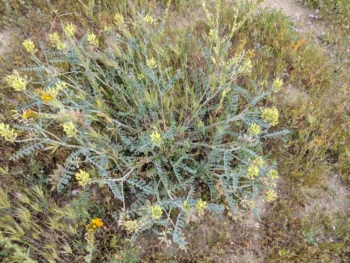
Freckled Milkvetch: A Tough Little California Native for Desert Gardens
If you’re looking for a resilient native plant that laughs in the face of drought and still manages to put on a pretty show, let me introduce you to the freckled milkvetch. This unassuming little California native might not win any flashiest-flower contests, but it’s got character, staying power, and some serious desert credentials that make it worth considering for your water-wise garden.
What Is Freckled Milkvetch?
Freckled milkvetch (Astragalus lentiginosus var. nigricalycis) is a biennial member of the pea family that calls California home. You might also see it listed under its synonym Astragalus nigricalycis in older references. This tough little plant has adapted to thrive in some of California’s most challenging desert environments, making it a natural choice for gardeners dealing with similar conditions.
Where Does It Grow?
This variety of freckled milkvetch is endemic to California, where it has carved out its niche in the state’s desert regions. As a native plant, it’s perfectly adapted to California’s climate patterns and supports local ecosystems.
- Species observed
- No observations
Why You Might Want to Grow Freckled Milkvetch
Here’s where this little plant really shines:
- True California native: Supporting local ecosystems and biodiversity
- Drought champion: Once established, it needs virtually no supplemental watering
- Pollinator magnet: Those small purple to violet pea-like flowers attract native bees and other beneficial insects
- Nitrogen fixer: Like other legumes, it actually improves soil quality by fixing nitrogen
- Low maintenance: Perfect for gardeners who want beauty without the fuss
Garden Design and Landscape Uses
Freckled milkvetch works beautifully in several garden styles:
- Desert and xeriscape gardens: Right at home with other drought-tolerant natives
- Rock gardens: Thrives in well-draining, rocky conditions
- Native plant gardens: Essential for authentic California native plantings
- Ground cover: Can help fill in sparse areas with its low-growing habit
Growing Conditions and Care
The beauty of freckled milkvetch lies in its simplicity. This plant asks for very little:
- Sunlight: Full sun is essential for best growth and flowering
- Soil: Well-draining sandy or rocky soils are ideal – avoid heavy clay or constantly moist conditions
- Water: Extremely drought tolerant once established; overwatering is more likely to harm it than help
- Climate zones: Best suited for USDA zones 8-10, matching California’s desert regions
Planting and Care Tips
Getting started with freckled milkvetch is refreshingly straightforward:
- Timing: Plant in fall for best establishment before the growing season
- Spacing: Give plants room to spread naturally
- Watering: Water lightly during establishment, then step back and let nature take over
- Fertilizing: Skip it entirely – this plant prefers lean soils
- Maintenance: Minimal pruning needed; may self-seed in favorable conditions
Is Freckled Milkvetch Right for Your Garden?
This plant is perfect if you’re gardening in California’s drier regions and want to create sustainable, water-wise landscapes that support native wildlife. It’s especially valuable for gardeners who appreciate subtle beauty over flashy displays and want plants that truly belong in their local ecosystem.
However, if you’re looking for a showstopper with large, showy blooms or you garden in areas with heavy clay soils and regular rainfall, you might want to consider other options that are better suited to your conditions.
Freckled milkvetch proves that sometimes the most valuable garden plants are the quiet achievers – the ones that ask for little, give back plenty, and help create landscapes that work in harmony with their natural surroundings.