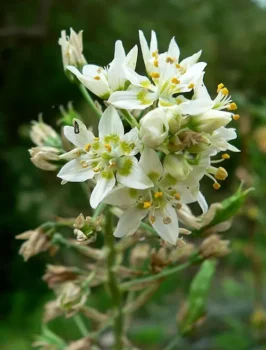
Fremont’s Deathcamas: A Beautiful but Dangerous Native Wildflower
With a name like deathcamas, you might think twice about inviting this plant into your garden. But Fremont’s deathcamas (Zigadenus fremontii) is actually a striking native wildflower that deserves consideration – with some very important caveats. This perennial beauty offers lovely white blooms and exceptional drought tolerance, making it a valuable addition to water-wise gardens. However, its toxic nature means it’s definitely not for every gardener or every situation.
What is Fremont’s Deathcamas?
Fremont’s deathcamas is a native perennial forb – basically a non-woody flowering plant that comes back year after year. It’s naturally found in California and Oregon, where it has adapted beautifully to the region’s Mediterranean climate. The plant grows from a bulb and produces grass-like foliage topped with clusters of small, creamy white flowers arranged in attractive spikes called racemes.
This native species is exclusively found in the western United States, specifically thriving in California and Oregon’s diverse landscapes.
- Species observed
- No observations
The Good: Why You Might Want to Grow It
Despite its ominous name, Fremont’s deathcamas has several appealing qualities that make it worth considering:
- Drought tolerance: Once established, this plant can handle dry conditions beautifully
- Native status: Supporting local ecosystems and wildlife
- Pollinator friendly: The flowers attract bees and other beneficial insects
- Low maintenance: Requires minimal care once settled in
- Attractive blooms: Delicate white flowers add elegance to wildflower gardens
- Hardy: Thrives in USDA zones 8-10
The Not-So-Good: Important Safety Considerations
Here’s the big warning: Fremont’s deathcamas is highly toxic to humans, pets, and livestock. All parts of the plant contain poisonous alkaloids that can cause serious illness or death if consumed. The name deathcamas isn’t just dramatic – it’s a real warning that our ancestors took seriously.
This means you should avoid planting it if you have:
- Small children who might nibble on plants
- Pets that tend to eat vegetation
- Livestock or animals that graze in your area
- Any situation where the plant might be mistaken for something edible
Growing Fremont’s Deathcamas Successfully
If you decide this native beauty is right for your situation, here’s how to grow it successfully:
Growing Conditions: This plant prefers well-draining soil and can handle both full sun and partial shade. It’s quite adaptable to different soil types as long as drainage is good.
Planting: Plant bulbs in fall, just like you would tulips or daffodils. This gives them time to establish roots before their spring growing season.
Care: Once established, these plants are remarkably low-maintenance. They need minimal watering after the first year and actually prefer to stay on the dry side during summer dormancy.
Height and Spread: Expect plants to reach 1-4 feet tall with a relatively narrow spread, making them perfect for tucking into wildflower meadows or naturalized areas.
Perfect Garden Settings
Fremont’s deathcamas works beautifully in:
- Native plant gardens
- Mediterranean-style landscapes
- Rock gardens
- Wildflower meadows
- Drought-tolerant borders
- Naturalized hillsides
The Bottom Line
Fremont’s deathcamas is a gorgeous native plant that supports local ecosystems and offers beautiful, drought-tolerant blooms. However, its toxic nature makes it unsuitable for many residential gardens, especially those with children or pets. If you choose to grow it, do so responsibly in appropriate locations where its beauty can be appreciated safely. Always source plants from reputable native plant nurseries, and never harvest from wild populations.
Consider this plant for remote or specialized garden areas where its native status and drought tolerance can shine, but its dangerous nature won’t pose a risk to family members or pets.