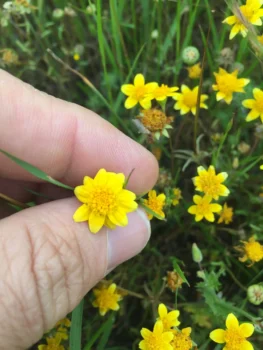
Fremont’s Goldfields: A Golden Carpet for Your Wetland Garden
If you’ve ever wondered how to bring the magic of California’s seasonal wetlands to your garden, meet Fremont’s goldfields (Lasthenia fremontii) – a charming annual that transforms soggy spots into shimmering seas of gold each spring. This native California wildflower might just be the perfect solution for that problematic wet area in your yard that nothing else seems to love.
What Makes Fremont’s Goldfields Special
Fremont’s goldfields is a delightful annual forb – essentially a non-woody flowering plant that completes its entire life cycle in one growing season. Don’t let its modest size fool you; this little powerhouse creates some of the most spectacular floral displays in nature. When conditions are right, thousands of bright yellow, daisy-like flowers bloom together, creating those famous golden carpets that California’s vernal pools are known for.
This plant goes by the botanical name Lasthenia fremontii and may sometimes be listed under its older scientific synonyms Baeria fremontii. But regardless of what name you find it under, you’re getting the same wonderful wildflower.
Where Fremont’s Goldfields Calls Home
As a true California native, Fremont’s goldfields is found exclusively within the Golden State’s borders. This endemic species has adapted perfectly to California’s unique Mediterranean climate and seasonal wetland conditions. You’ll find it thriving in the state’s vernal pools, seasonal wetlands, and other areas that flood in winter and dry out completely by summer.
- Species observed
- No observations
Growing Conditions: It’s All About the Water Cycle
Here’s where Fremont’s goldfields gets interesting – and maybe a little demanding. This plant is classified as an obligate wetland species, which means it almost always occurs in wetlands. But it’s not just any wetland that will do. Fremont’s goldfields thrives in areas that experience a very specific cycle: flooding or saturation during the winter months, followed by complete drying in late spring and summer.
In terms of climate, this beauty is suited for USDA hardiness zones 8-10, which perfectly matches California’s Mediterranean climate zones. The combination of wet winters and dry summers is essential for its success.
Why Your Garden (and Local Wildlife) Will Love It
Beyond its stunning visual impact, Fremont’s goldfields serves as an important resource for California’s native pollinators. The abundant flowers provide nectar and pollen for native bees, butterflies, and other beneficial insects during the crucial spring months when many animals are most active.
From a design perspective, this plant excels in:
- Naturalized wetland gardens
- Vernal pool replications
- Rain gardens and bioswales
- Native California plant gardens
- Seasonal water features
- Restoration projects
Growing Fremont’s Goldfields Successfully
Successfully growing Fremont’s goldfields is all about mimicking its natural habitat. Here’s what you need to know:
Planting: Direct seed in fall when the first rains begin. This plant doesn’t transplant well, so starting from seed in place is your best bet. The seeds need the winter chill and moisture to germinate properly.
Soil: Clay soils that hold water work best, though it can adapt to other soil types as long as the moisture requirements are met.
Water: This is the crucial part – you’ll need to provide winter and spring moisture (either through natural rainfall or irrigation), followed by allowing the area to dry completely in late spring and summer. This mimics the natural vernal pool cycle.
Care: Once you’ve got the water cycle right, Fremont’s goldfields is remarkably low-maintenance. No fertilizer needed, no pruning required – just let nature take its course.
Is Fremont’s Goldfields Right for Your Garden?
This plant is perfect for gardeners who want to create authentic California native habitats and have the ability to manage seasonal water cycles. It’s especially valuable for those dealing with areas that stay wet in winter but dry out in summer – conditions that challenge many other garden plants.
However, Fremont’s goldfields isn’t the right choice if you’re looking for a traditional perennial border plant or need something for consistently dry conditions. Its beauty lies in embracing California’s natural seasonal rhythms rather than fighting against them.
If you’re passionate about supporting native wildlife, creating educational gardens that showcase California’s unique ecosystems, or simply want to experience the joy of seeing thousands of golden flowers bloom where others see only seasonal inconvenience, Fremont’s goldfields might be exactly what your garden is missing.