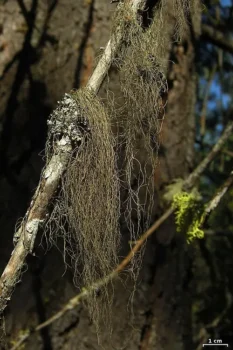
Fremont’s Horsehair Lichen: Nature’s Wispy Garden Accent
If you’ve ever wandered through a mountain forest and noticed what looks like flowing green-gray hair cascading from tree branches, you’ve likely encountered Fremont’s horsehair lichen (Bryoria fremontii). This fascinating organism isn’t actually a plant at all—it’s a lichen, which makes it a unique partnership between a fungus and an algae living together in perfect harmony.
What Exactly Is Fremont’s Horsehair Lichen?
Fremont’s horsehair lichen belongs to a group of organisms that blur the lines between the plant and fungal kingdoms. This remarkable lichen creates long, thread-like strands that drape gracefully from tree branches, resembling delicate curtains or, as the name suggests, coarse horsehair. The scientific community also knows it by several synonyms, including Alectoria fremontii and Alectoria corneliae, reflecting its complex taxonomical history.
As a native species to North America, this lichen has been quietly decorating our western forests for millennia, serving as a living indicator of air quality and ecosystem health.
Where You’ll Find This Natural Beauty
Fremont’s horsehair lichen calls the mountainous regions of western North America home, stretching from British Columbia down to California and eastward to Montana and Colorado. It thrives in cooler, humid environments where the air is clean and unpolluted—making it increasingly precious in our modern world.
Identifying Fremont’s Horsehair Lichen
Spotting this lichen in the wild is relatively straightforward once you know what to look for:
- Long, hair-like strands that hang from tree branches like natural tinsel
- Gray-green to yellowish-green coloration that can vary with moisture and light conditions
- Typically found growing on coniferous trees, especially in mature forests
- Strands can reach several inches to over a foot in length
- Has a somewhat wiry, tough texture when dry
Is It Beneficial to Your Garden?
Here’s where things get interesting—you can’t actually plant Fremont’s horsehair lichen in your garden. This isn’t a seed packet situation! Lichens establish themselves naturally when conditions are just right, and those conditions include:
- Clean, unpolluted air (lichens are notoriously sensitive to air quality)
- Adequate humidity and moisture
- Suitable host trees, particularly conifers
- Cooler temperatures typical of mountainous regions
However, if you’re fortunate enough to have Fremont’s horsehair lichen appear naturally in your woodland garden or on your property, consider yourself blessed! Its presence indicates excellent air quality and a healthy ecosystem.
The Benefits of Having This Lichen Around
While you might not attract traditional pollinators with this species (lichens don’t produce flowers), Fremont’s horsehair lichen offers other valuable benefits:
- Serves as nesting material for birds and small mammals
- Acts as a natural air quality monitor—its presence means your air is clean
- Adds unique texture and visual interest to forest gardens
- Provides food for certain wildlife species, including deer and elk
- Contributes to the overall biodiversity of your woodland ecosystem
Creating Lichen-Friendly Conditions
While you can’t plant this lichen directly, you can create conditions that might encourage its natural establishment:
- Maintain mature trees, especially conifers
- Avoid using chemicals or pesticides that could pollute the air
- Preserve natural humidity levels in your woodland areas
- Minimize disturbance to existing forest ecosystems
A Living Testament to Clean Air
Perhaps the most remarkable thing about Fremont’s horsehair lichen is what its presence tells us. In our increasingly polluted world, finding this delicate species hanging from trees is like discovering a living certificate of environmental health. It’s nature’s way of saying, The air here is clean, the ecosystem is balanced, and all is well.
So the next time you’re hiking through mountain forests and spot those wispy, hair-like strands dancing in the breeze, take a moment to appreciate this incredible organism. You’re witnessing one of nature’s most successful partnerships—and a beautiful reminder of the intricate connections that make our ecosystems thrive.