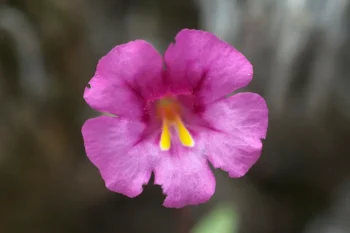
Fremont’s Monkeyflower: A Charming Native Annual for Water-Wise Gardens
If you’re looking to add a splash of sunshine to your drought-tolerant garden, Fremont’s monkeyflower (Mimulus fremontii) might just be the delightful annual you’ve been searching for. This charming California native brings both beauty and ecological value to landscapes while asking for very little in return.
What is Fremont’s Monkeyflower?
Fremont’s monkeyflower is a native annual forb that belongs to the snapdragon family. As a herbaceous plant without woody stems, it completes its entire life cycle in one growing season, making it perfect for gardeners who enjoy changing up their landscape annually or filling in gaps between perennial plantings.
You might also encounter this plant listed under its synonyms Eunanus fremontii or Mimulus glabratus subspecies fremontii in older botanical references, but rest assured – they’re all referring to the same lovely wildflower.
Where Does It Grow Naturally?
This California native has made its home in the Golden State’s diverse landscapes, from desert foothills to chaparral regions. As a plant that’s perfectly adapted to California’s Mediterranean climate, it knows how to thrive in conditions that might challenge other garden favorites.
- Species observed
- No observations
Why Gardeners Love Fremont’s Monkeyflower
There are several compelling reasons to consider adding this native beauty to your landscape:
- Stunning blooms: The bright yellow tubular flowers often feature charming red spotting, creating an eye-catching display from spring through early summer
- Pollinator magnet: Bees, butterflies, and hummingbirds are drawn to its nectar-rich flowers
- Water-wise: Once established, it requires minimal irrigation, making it perfect for drought-tolerant gardens
- Low maintenance: This self-sufficient annual needs very little care once planted
- Ecological benefits: Supporting native plants helps maintain local ecosystem health
Perfect Garden Settings
Fremont’s monkeyflower shines in several types of garden settings:
- Wildflower and native plant gardens
- Rock gardens and Mediterranean landscapes
- Desert-themed gardens
- Naturalized areas and meadow plantings
- Drought-tolerant landscape designs
Growing Conditions and Care
The beauty of Fremont’s monkeyflower lies in its simplicity. This adaptable native thrives in USDA hardiness zones 8-10 and prefers:
- Sunlight: Full sun exposure for best flowering
- Soil: Well-draining sandy or gravelly soils (avoid heavy clay that retains moisture)
- Water: Low water requirements once established; avoid overwatering
- Fertilizer: Generally unnecessary – native soils provide adequate nutrition
Planting and Care Tips
Getting started with Fremont’s monkeyflower is refreshingly straightforward:
- Timing: Direct sow seeds in fall for spring germination, or plant in early spring after the last frost
- Seeding: Scatter seeds over prepared soil and rake lightly – they need some light to germinate
- Spacing: Allow adequate space for air circulation to prevent fungal issues
- Watering: Provide regular water during establishment, then reduce to occasional deep watering
- Maintenance: Deadhead spent flowers to encourage continued blooming
Is Fremont’s Monkeyflower Right for Your Garden?
This native annual is an excellent choice for gardeners who want to create beautiful, sustainable landscapes that support local wildlife. It’s particularly well-suited for those dealing with water restrictions or challenging growing conditions where other plants might struggle.
However, if you’re looking for a long-lived perennial or prefer plants that provide structure year-round, you might want to combine Fremont’s monkeyflower with native shrubs and perennial grasses for a more permanent framework.
Whether you’re creating a dedicated native plant garden or simply want to add some California charm to your landscape, Fremont’s monkeyflower offers an easy, rewarding way to garden in harmony with nature while enjoying its cheerful blooms and the wildlife they attract.