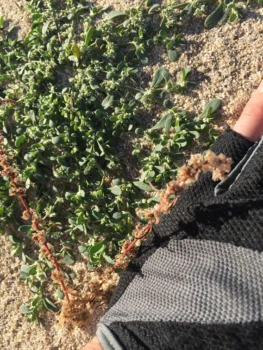
Fringed Amaranth: A Hardy Native for Southwest Gardens
If you’re gardening in the American Southwest and looking for a low-maintenance native that can handle blazing heat and minimal water, meet fringed amaranth (Amaranthus fimbriatus). This unassuming little annual might not win any beauty contests, but it’s got personality and plenty of practical benefits for the right garden.
What Makes Fringed Amaranth Special?
Fringed amaranth is a true southwestern native, calling home to the desert regions of Arizona, California, Nevada, New Mexico, Texas, and Utah. As an annual forb, it completes its entire life cycle in one growing season, making it a reliable self-seeding addition to naturalized areas and xeriscaped gardens.
- Species observed
- No observations
This hardy little plant typically grows 6 to 24 inches tall with a spread of 12 to 18 inches, forming a compact, somewhat sprawling habit. Don’t expect showy blooms – fringed amaranth produces small, inconspicuous flowers arranged in dense, delicate clusters that give the plant its characteristic fringed appearance.
Why Grow Fringed Amaranth?
Here’s where this modest native really shines:
- Ultimate drought tolerance: Once established, it thrives with minimal to no supplemental watering
- Native authenticity: Supports local ecosystems and provides habitat for indigenous wildlife
- Low maintenance: Perfect for gardeners who want beauty without the fuss
- Self-seeding: Will naturalize in appropriate conditions, creating effortless seasonal displays
- Desert garden perfect: Ideal for xeriscaping and water-wise landscapes
Best Garden Situations
Fringed amaranth works beautifully in:
- Native plant gardens and natural landscapes
- Xeriscaped areas requiring minimal water
- Desert-themed gardens
- Naturalized meadow plantings
- Ground cover in challenging, dry locations
Growing Conditions and Care
The beauty of fringed amaranth lies in its simplicity. This tough native prefers:
- Sunlight: Full sun exposure
- Soil: Well-draining sandy or rocky soils (clay is not its friend)
- Water: Drought tolerant once established; overwatering can be harmful
- Climate: Hardy in USDA zones 8-10
- Fertilizer: None needed – it thrives in poor soils
Planting and Care Tips
Getting started with fringed amaranth is refreshingly straightforward:
- Direct sow seeds in spring after the last frost date
- Scatter seeds on prepared soil surface and lightly rake in
- Water gently until germination occurs
- Once established, reduce watering significantly
- Allow plants to self-seed for natural reproduction
- No pruning or deadheading required
The Bottom Line
Fringed amaranth might not be the flashiest plant in your garden, but it’s definitely one of the most reliable if you live in the Southwest. It’s the garden equivalent of that dependable friend who’s always there for you – not demanding attention, but quietly doing its job while asking for almost nothing in return. For water-wise gardeners, native plant enthusiasts, or anyone looking to create sustainable southwestern landscapes, this little annual deserves serious consideration.
Just remember: this is a specialized native that thrives in arid conditions. If you garden outside its native range or in areas with high humidity and regular rainfall, you might want to explore native alternatives better suited to your local conditions.