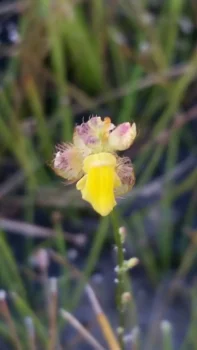
Fringed Bladderwort: Florida’s Fascinating Carnivorous Native
Meet one of nature’s most intriguing aquatic plants – the fringed bladderwort (Utricularia simulans). This tiny carnivorous native might just be the conversation starter your water garden has been missing. While it may not have the dramatic appeal of a Venus flytrap, this little Florida native brings its own brand of botanical magic to wetland gardens.
What Makes Fringed Bladderwort Special?
Fringed bladderwort is a fascinating example of nature’s ingenuity. This small forb – that’s garden-speak for a non-woody flowering plant – spends its time floating in shallow water or growing in perpetually soggy soils. What makes it truly special is its carnivorous lifestyle: tiny bladder-like traps capture microscopic prey, helping the plant thrive in nutrient-poor environments where other plants would struggle.
The plant produces delicate yellow flowers on slender stems that rise above the water surface, creating a charming display that’s subtle yet captivating. Don’t expect towering blooms – this is a plant that wins hearts through intricate details rather than bold statements.
Native Status and Where It Grows
Fringed bladderwort is a true native to the lower 48 states, with its primary home in Florida. This gives it serious credentials for native plant enthusiasts looking to support local ecosystems. As a naturally occurring species, it’s perfectly adapted to its environment and requires no special permits or concerns about invasive behavior.
- Species observed
- No observations
Perfect Gardens for Fringed Bladderwort
This isn’t a plant for every garden, and that’s perfectly fine! Fringed bladderwort thrives in very specific conditions that make it ideal for:
- Bog gardens and wetland restorations
- Aquatic gardens with shallow areas
- Rain gardens with standing water
- Native plant collections focused on carnivorous species
- Educational gardens showcasing unique plant adaptations
If you’re working with consistently wet, acidic conditions in USDA zones 8-10, this could be your perfect match.
Growing Conditions and Care
Fringed bladderwort has very specific needs, but once you understand them, care becomes surprisingly straightforward:
- Water requirements: Constant moisture or standing water – this is an obligate wetland plant that almost always occurs in wetlands
- Soil type: Acidic, nutrient-poor conditions (fertilizer actually harms carnivorous plants!)
- Light: Full sun to partial shade
- Climate: Thrives in zones 8-10, matching its Florida origins
Planting and Care Tips
Growing fringed bladderwort successfully means thinking like the plant – it evolved in nutrient-poor wetlands, so recreating those conditions is key:
- Never fertilize – the carnivorous nature means it gets nutrients from prey, not soil
- Use rainwater or distilled water when possible, as tap water minerals can harm the plant
- Maintain consistent water levels – let it experience the natural wet/slightly less wet cycle of its native habitat
- Be patient with establishment – this isn’t a fast-growing plant, but it’s worth the wait
Wildlife and Ecosystem Benefits
While specific wildlife benefits for fringed bladderwort aren’t well-documented, its role as a native wetland plant means it contributes to the complex ecosystem relationships that support local biodiversity. The small yellow flowers may provide nectar for tiny insects, and the plant’s presence indicates a healthy wetland ecosystem.
Is Fringed Bladderwort Right for Your Garden?
This plant is definitely not for everyone, and that’s part of its charm. Consider fringed bladderwort if you:
- Have naturally wet, acidic conditions
- Love unique, conversation-starting plants
- Are creating native wetland habitats
- Enjoy the challenge of growing carnivorous plants
- Want to support native Florida ecosystems
Skip this plant if you have typical garden beds with regular soil drainage – it simply won’t survive outside its specialized wetland niche.
Fringed bladderwort proves that native plants come in all shapes, sizes, and lifestyles. While it may not suit every garden, for the right spot and the right gardener, it offers a fascinating glimpse into the incredible adaptability of native flora. Sometimes the most rewarding plants are the ones that teach us something new about the natural world around us.