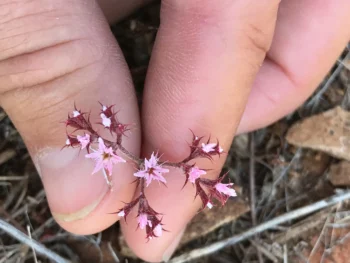
Fringed Spineflower: A Delicate California Native Worth Growing
If you’re looking to add some understated charm to your native California garden, the fringed spineflower (Chorizanthe fimbriata var. fimbriata) might just be your new favorite annual. This petite wildflower may not shout for attention like some of its showier cousins, but its delicate beauty and ecological value make it a wonderful addition to drought-tolerant landscapes.
What Makes Fringed Spineflower Special?
The fringed spineflower is a true California native, found naturally throughout the Golden State. As an annual forb, it completes its entire life cycle in one growing season, producing small but charming flowers adorned with distinctive fringed bracts that give the plant its common name. These tiny white to pink blooms may be modest in size, but they pack a punch when it comes to supporting local pollinators.
Where Does It Grow Naturally?
This special little plant calls California home, where it thrives in the state’s Mediterranean climate. You’ll find it growing naturally in coastal areas and foothills, often in sandy or rocky soils that drain well.
- Species observed
- No observations
A Word About Conservation
Before we dive into growing tips, it’s important to note that fringed spineflower has a conservation status that suggests it may be somewhat uncommon in parts of its range. If you’re interested in growing this plant, make sure to source seeds or plants from reputable native plant nurseries that practice responsible collection methods. Never collect from wild populations.
Why Grow Fringed Spineflower in Your Garden?
There are several compelling reasons to include this native annual in your landscape:
- Supports pollinators: Small native bees and beneficial insects love the tiny flowers
- Drought tolerant: Perfect for water-wise gardening once established
- Low maintenance: Being an annual, it doesn’t require long-term care commitments
- Authentic California native: Helps restore local ecosystems and supports biodiversity
- Naturalistic beauty: Adds delicate texture to wildflower meadows and native plant gardens
What Type of Garden Is It Best For?
Fringed spineflower works beautifully in several garden styles:
- Native California plant gardens
- Drought-tolerant landscapes
- Coastal gardens
- Wildflower meadows
- Naturalized areas
- Rock gardens with good drainage
Growing Conditions and Care
The good news is that fringed spineflower isn’t particularly fussy once you understand its basic needs:
Climate: Best suited for USDA hardiness zones 9-11, where it can enjoy California’s Mediterranean climate patterns.
Soil: Prefers well-draining sandy or rocky soils. Heavy clay or constantly moist soil will likely spell trouble for this drought-adapted native.
Sun exposure: Thrives in full sun conditions, just like in its natural habitat.
Water needs: Once established, this plant is quite drought-tolerant. In fact, too much summer water can be detrimental.
Planting and Care Tips
Since fringed spineflower is an annual, your main job is getting it established successfully:
- Timing: Direct seed in fall to mimic natural germination patterns
- Soil prep: Ensure excellent drainage – amend heavy soils with sand or gravel if needed
- Watering: Provide moderate water during germination and early growth, then reduce significantly
- Summer care: Avoid irrigating during hot summer months once plants are established
- Let it self-seed: Allow some flowers to go to seed for next year’s display
The Bottom Line
Fringed spineflower may not be the flashiest plant in your garden, but it brings authentic California character and ecological value to native landscapes. Its delicate flowers support pollinators, and its drought tolerance makes it perfect for sustainable gardening. Just remember to source responsibly and give it the well-draining conditions it craves. With minimal care, you’ll be rewarded with a charming display of fringed blooms that truly belongs in the California landscape.