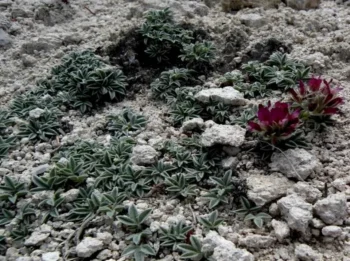
Frisco Clover: A Rare Mountain Gem Worth Protecting
Meet Frisco clover (Trifolium friscanum), one of Utah’s most precious botanical treasures. This tiny perennial herb might not look like much at first glance, but it’s actually one of the rarest plants in North America. If you’re a native plant enthusiast with a soft spot for conservation stories, this little clover has quite the tale to tell.
What Makes Frisco Clover Special?
Frisco clover is a perennial forb – basically a non-woody plant that comes back year after year. Like its clover cousins, it produces small white to pale pink flowers that are absolutely charming when you get up close. But here’s the kicker: this plant is found nowhere else on Earth except in a few spots in Utah’s high country.
You might also see this plant listed under its synonym, Trifolium andersonii var. friscanum, but don’t let the name confusion fool you – we’re talking about the same incredibly rare species.
Where Does It Call Home?
This mountain dweller is endemic to Utah, meaning it evolved here and exists nowhere else naturally. It’s adapted to life in high-elevation environments where most plants would throw in the towel. We’re talking about some seriously tough growing conditions that only the most specialized plants can handle.
- Species observed
- No observations
A Plant in Crisis
Here’s where things get serious, folks. Frisco clover has a Global Conservation Status of S1, which translates to Critically Imperiled. That’s conservation-speak for we’re really, really worried about this plant. With typically five or fewer known locations and fewer than 1,000 individual plants remaining in the wild, this species is hanging on by a thread.
Should You Grow Frisco Clover?
While we absolutely support growing native plants, Frisco clover presents a unique situation. Given its critically imperiled status, we strongly recommend against attempting to grow this species unless you:
- Have access to responsibly sourced, legally obtained plant material
- Are participating in a legitimate conservation program
- Can provide the very specific high-elevation growing conditions it requires
- Understand that cultivation success is extremely unlikely outside its natural habitat
Growing Conditions (For Conservation Purposes Only)
If you’re involved in legitimate conservation efforts, here’s what Frisco clover needs:
- Elevation: High-altitude conditions (specific elevations vary by location)
- Climate: Cool temperatures typical of mountain environments
- Soil: Well-drained soils adapted to its native habitat
- Hardiness zones: Likely zones 4-6, though this is challenging to cultivate outside its natural range
Wildlife and Pollinator Benefits
Like other clovers, Frisco clover likely provides nectar for native bees and other small pollinators in its mountain habitat. Its flowers, though small, play an important role in supporting the specialized ecosystem where it grows.
Better Alternatives for Your Garden
Instead of trying to grow this rare species, consider these more widely distributed native Utah clovers and wildflowers:
- White clover (Trifolium repens) – though not native, it’s naturalized and supports pollinators
- Rocky Mountain beeplant (Cleome serrulata) – native and great for pollinators
- Utah penstemon (Penstemon utahensis) – gorgeous native wildflower
- Scarlet globemallow (Sphaeralcea coccinea) – drought-tolerant native beauty
How You Can Help
The best way to support Frisco clover isn’t by growing it in your garden – it’s by supporting conservation organizations working to protect its natural habitat. Consider donating to or volunteering with groups focused on Utah’s rare plant conservation.
Sometimes the most loving thing we can do for a plant is to admire it from afar and work to protect the wild places where it belongs. Frisco clover is a reminder that our native flora includes some truly irreplaceable treasures worth preserving for future generations.