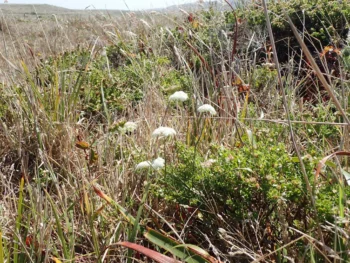
Gairdner’s Yampah: A Hidden Gem for California Native Gardens
If you’re looking to add a touch of California’s wild beauty to your garden, Gairdner’s yampah (Perideridia gairdneri gairdneri) might just be the delicate charmer you’ve been searching for. This perennial forb brings an understated elegance to native landscapes with its feathery foliage and clusters of tiny white flowers that dance in the summer breeze.
What Makes Gairdner’s Yampah Special?
Gairdner’s yampah is a true California native, found naturally in the Sierra Nevada and surrounding mountain ranges. As a member of the carrot family, it shares some characteristics with its more famous relatives, sporting delicate, fern-like leaves and umbrella-shaped flower clusters called umbels. But don’t let its modest appearance fool you – this little plant packs a big punch when it comes to supporting local ecosystems.
Standing 1 to 4 feet tall when in bloom, this perennial forb creates a lovely textural contrast in wildflower meadows and naturalized garden areas. Its scientific synonyms include Carum gairdneri, reflecting its classification within the diverse world of umbellifers.
Where Does It Grow?
Gairdner’s yampah calls California home, where it has adapted to the state’s unique Mediterranean climate and diverse topography. You’ll find it thriving in mountain meadows and grasslands throughout its native range.
- Species observed
- No observations
A Word About Rarity
Here’s something important to know: Gairdner’s yampah has a Global Conservation Status of S5T3, which indicates it needs our attention. While this beautiful native is worth growing in your garden, it’s crucial to source your plants or seeds responsibly. Always purchase from reputable native plant nurseries that propagate their own stock rather than collecting from wild populations.
Why Your Garden (and Local Wildlife) Will Love It
This charming plant is more than just a pretty face. Its umbel flowers are magnets for beneficial insects, including:
- Native bees seeking nectar and pollen
- Beneficial wasps that help control garden pests
- Small butterflies and other pollinators
The delicate white flowers bloom in summer, creating a cloud-like effect that adds movement and lightness to garden compositions. It’s particularly stunning when planted in drifts or allowed to naturalize in meadow-style gardens.
Perfect Garden Settings
Gairdner’s yampah shines in:
- Native California gardens focused on regional plants
- Drought-tolerant landscapes
- Wildflower meadows and prairie restorations
- Naturalized areas where you want a wild look
- Pollinator gardens supporting beneficial insects
Growing Gairdner’s Yampah Successfully
The good news is that once established, this native is relatively low-maintenance – it’s adapted to California’s dry summers and mild, wet winters after all!
Hardiness: Suitable for USDA zones 7-10, making it perfect for most of California’s climate zones.
Sun and Soil: Give it full sun to partial shade and well-draining soil. Like many California natives, it doesn’t appreciate soggy conditions, especially during its summer dormancy period.
Water Needs: Once established, Gairdner’s yampah is quite drought tolerant. Water regularly during its first growing season, then gradually reduce irrigation. It may naturally go dormant during the hottest, driest part of summer – this is completely normal!
Planting and Care Tips
For best results with Gairdner’s yampah:
- Plant seeds in fall to take advantage of natural winter rains
- If starting with plants, spring planting works well too
- Provide regular water the first year, then taper off
- Avoid fertilizing – California natives prefer lean soils
- Allow the plant to go dormant naturally in summer
- Deadhead spent flowers if you want to prevent self-seeding, or let them go to seed for a more naturalized look
The Bottom Line
Gairdner’s yampah is a wonderful choice for gardeners who want to support California’s native ecosystems while adding delicate beauty to their landscapes. Its airy flowers and graceful form make it a valuable addition to native gardens, and its pollinator benefits make it an ecological asset. Just remember to source your plants responsibly, and you’ll be rewarded with a low-maintenance native that truly belongs in your California garden.
Whether you’re creating a meadow-style planting or simply want to add some authentic California character to your landscape, this charming yampah deserves a spot on your native plant wish list.