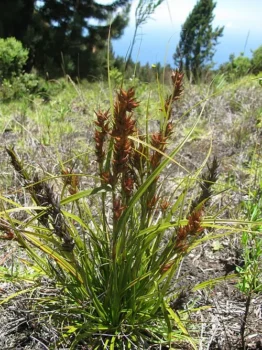
Gaudichaud’s Sawsedge: A Rare Hawaiian Native Worth Protecting
Meet Gaudichaud’s sawsedge (Morelotia gahniiformis), a little-known Hawaiian native that deserves a spot in our conservation conversations, if not necessarily in every backyard garden. This perennial sedge represents one of Hawaii’s unique botanical treasures, quietly growing in its island home while most of the gardening world remains unaware of its existence.
What Exactly Is Gaudichaud’s Sawsedge?
Don’t let the name fool you – while it’s called a sawsedge, Morelotia gahniiformis isn’t actually a grass. It belongs to the sedge family (Cyperaceae), making it a grass-like plant that shares more in common with its sedge cousins than with true grasses. Think of it as nature’s way of creating something that looks grass-like but marches to the beat of its own botanical drum.
You might occasionally see this plant listed under its former scientific names, including Gahnia gahniiformis or Machaerina gahniiformis – botanical names have a way of evolving as scientists learn more about plant relationships!
Where Does It Call Home?
Gaudichaud’s sawsedge is exclusively Hawaiian – you won’t find this species growing wild anywhere else in the world. It’s what botanists call an endemic species, meaning it evolved specifically in Hawaii and exists nowhere else naturally. This makes it particularly special and worth protecting.
- Species observed
- No observations
Should You Grow Gaudichaud’s Sawsedge?
Here’s where things get interesting – and a bit cautious. This sedge has a conservation status that suggests it’s not exactly common in the wild. While it’s not critically endangered, it’s not abundant either, falling somewhere in that concerning middle ground where we need to pay attention to its wellbeing.
If you’re determined to grow this Hawaiian native, here are the important considerations:
- Only source plants or seeds from reputable suppliers who can verify responsible collection practices
- Never collect from wild populations
- Consider this plant only if you’re in Hawaii or can provide Hawaiian-like growing conditions
- Remember that very little cultivation information is available, so you’d be somewhat experimenting
The Reality for Most Gardeners
Let’s be honest – Gaudichaud’s sawsedge isn’t likely to become your go-to landscaping plant anytime soon. With limited cultivation information available and its rarity status, this is more of a conservation species than a garden center regular. Most mainland gardeners would be better served by choosing locally native sedges that are easier to source and grow successfully.
For Hawaiian gardeners interested in native plants, this species could be part of a conservation-minded landscape, but approach it with respect for its rarity and ensure any plants come from ethical sources.
Supporting Hawaiian Plant Conservation
Even if you never grow Gaudichaud’s sawsedge yourself, you can still support Hawaiian plant conservation by:
- Learning about and supporting organizations that protect Hawaiian native plants
- Choosing native plants appropriate to your own region
- Spreading awareness about the importance of endemic species
- Supporting botanical gardens and conservation programs
Sometimes the best way to appreciate a plant is simply knowing it exists and deserves our protection. Gaudichaud’s sawsedge may not fill your garden beds, but it fills an important ecological niche in its Hawaiian home – and that’s worth celebrating.