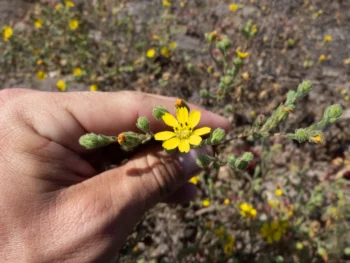
Gaviota Tarplant: A Rare California Beauty Worth Protecting
Meet the Gaviota tarplant, a charming yet critically important wildflower that deserves a special place in California native plant gardens. This annual beauty might not win any popularity contests, but it’s got character, conservation value, and a fascinating story that makes it worthy of your garden space—if you can source it responsibly.
What Makes Gaviota Tarplant Special
Officially known as Deinandra increscens villosa, the Gaviota tarplant is a true California native that belongs to the sunflower family. This annual forb (that’s garden-speak for a non-woody flowering plant) puts on quite a show with its bright yellow, daisy-like blooms that appear from summer into fall. The plant gets its tarplant nickname from its notably sticky foliage—nature’s way of protecting itself from insects and conserving moisture.
Growing 3 to 6 feet tall, this native wildflower has a somewhat wild, untamed appearance that works beautifully in naturalistic garden settings. You might also encounter it under its synonym Hemizonia increscens ssp. villosa in older plant references.
A Plant in Need: Understanding Its Endangered Status
Important Conservation Note: Before you get too excited about adding this plant to your garden, there’s something crucial you need to know. The Gaviota tarplant is listed as endangered in the United States. This means it’s facing a very real risk of extinction in the wild.
If you’re interested in growing this species, please ensure you source seeds or plants only from reputable native plant nurseries that work with legally and ethically obtained material. Never collect from wild populations—this could further threaten the species’ survival.
Where It Calls Home
The Gaviota tarplant is endemic to California, with an extremely limited native range centered around Santa Barbara County’s coastal areas. This narrow distribution is part of what makes the species so vulnerable to extinction.
- Species observed
- No observations
Why Grow Gaviota Tarplant?
Despite its endangered status (or perhaps because of it), there are compelling reasons to consider this plant for your native garden:
- Conservation impact: Growing this species helps preserve genetic diversity and supports conservation efforts
- Pollinator magnet: The bright yellow flowers attract native bees, butterflies, and other beneficial insects
- Authentic California character: Few plants are more truly Californian than this coastal endemic
- Low maintenance: Once established, it’s remarkably drought-tolerant
- Educational value: A great conversation starter about native plant conservation
Perfect Garden Settings
The Gaviota tarplant thrives in:
- Native California wildflower gardens
- Drought-tolerant landscapes
- Coastal restoration projects
- Butterfly and pollinator gardens
- Educational or demonstration gardens focused on conservation
Growing Conditions and Care
This hardy annual adapts well to cultivation when its basic needs are met:
Climate: Best suited for USDA zones 9-11, particularly coastal California conditions
Sunlight: Thrives in full sun locations
Soil: Prefers well-draining soils and can tolerate poor, sandy conditions typical of its coastal habitat
Water: Drought-tolerant once established, but benefits from occasional deep watering during dry spells
Planting and Care Tips
Success with Gaviota tarplant comes down to mimicking its natural habitat:
- Timing: Direct seed in fall for spring germination, following natural rainfall patterns
- Spacing: Allow 2-3 feet between plants as they can get quite bushy
- Watering: Water regularly during establishment, then reduce to minimal supplemental irrigation
- Maintenance: Minimal pruning needed; allow plants to go to seed for next year’s display
- Propagation: Primarily grown from seed; may self-seed in favorable conditions
A Plant Worth Protecting
The Gaviota tarplant represents something precious in our native plant world—a species that’s both beautiful and desperately in need of our help. By growing it responsibly in our gardens, we become part of its conservation story. Just remember: source ethically, grow proudly, and help spread awareness about this remarkable California endemic.
While you’re planning your native garden, consider pairing Gaviota tarplant with other California natives that share similar growing conditions. Together, they’ll create a authentic slice of California’s coastal ecosystem right in your backyard.