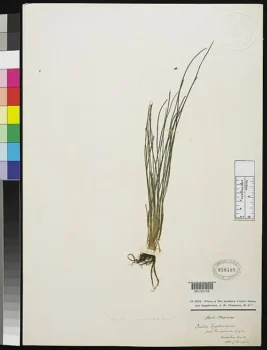
Georgia Quillwort: A Rare Aquatic Treasure Worth Protecting
Meet the Georgia quillwort (Isoetes georgiana), one of nature’s most intriguing and elusive aquatic plants. This isn’t your typical garden variety plant – it’s a living fossil that’s been quietly thriving in Georgia’s seasonal wetlands for millions of years, long before flowering plants even existed!
What Exactly Is a Georgia Quillwort?
Georgia quillwort belongs to an ancient group of plants called quillworts, which are more closely related to ferns than to the grasses they resemble. These perennial plants are true botanical time capsules, representing a lineage that dates back over 400 million years. Unlike most plants in your garden, quillworts don’t produce flowers or seeds. Instead, they reproduce through spores, much like ferns and mosses.
This grass-like plant emerges from submerged or saturated soils with its characteristic quill-shaped leaves, creating small tufts that might easily be mistaken for young sedges or grasses by the casual observer.
Where Does Georgia Quillwort Call Home?
As its name suggests, Georgia quillwort is endemic to Georgia, making it a true botanical treasure of the Peach State. This specialized plant has carved out its niche in temporary pools, seasonal wetlands, and other ephemeral water bodies throughout the state.
- Species observed
- No observations
Georgia quillwort is classified as an obligate wetland species in the Atlantic and Gulf Coastal Plain region, meaning it almost always occurs in wetland environments. It thrives in areas that experience seasonal flooding and drying cycles.
A Plant Worth Protecting
Important Conservation Note: Georgia quillwort has a global conservation status of S2S3, indicating it’s quite rare and potentially vulnerable. This means that while it’s a fascinating native species, it requires our protection and respect.
If you’re interested in supporting this species, the best approach is to:
- Protect existing wetland habitats in Georgia
- Support wetland restoration projects
- Only source plants through reputable native plant societies or botanical institutions
- Never collect plants from wild populations
How to Identify Georgia Quillwort
Spotting Georgia quillwort in the wild requires knowing where and when to look:
- Habitat: Shallow water or saturated soils in temporary pools and seasonal wetlands
- Appearance: Small tufts of narrow, grass-like leaves emerging directly from the substrate
- Size: Typically quite small and inconspicuous
- Timing: Most visible during specific seasonal conditions when water levels are appropriate
Is Georgia Quillwort Right for Your Garden?
Here’s the honest truth: Georgia quillwort is not a plant for the average home gardener. This specialized species requires very specific wetland conditions that are challenging to replicate in typical garden settings. It needs:
- Seasonal flooding and drying cycles
- Acidic, nutrient-poor soils
- Specific water chemistry
- Minimal competition from other plants
Rather than attempting to grow this rare species, consider supporting it through habitat conservation efforts and choosing other native wetland plants for your bog garden or water feature that are more readily available and less conservation-sensitive.
The Bottom Line
Georgia quillwort represents one of nature’s most ancient and specialized plant lineages. While it may not be the showstopper for your backyard pond, it’s an irreplaceable part of Georgia’s natural heritage that deserves our admiration and protection. Sometimes the best way to garden with natives is to ensure these rare species have the wild spaces they need to survive and thrive.
If you’re passionate about aquatic plants and wetland gardening, focus on more common native alternatives while supporting conservation efforts that protect the unique habitats where Georgia quillwort and other rare species make their homes.