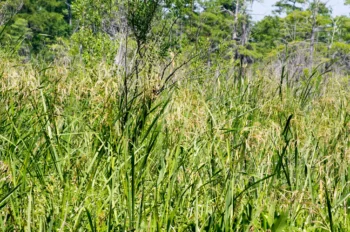
Giant Cutgrass: The Towering Native Wetland Wonder
If you’re looking for a plant that makes a bold statement in wet areas, giant cutgrass (Zizaniopsis miliacea) might just be your answer. This impressive native perennial grass lives up to its name, reaching heights of up to 9 feet and creating dense, impenetrable stands that look like something from a nature documentary.
What Exactly Is Giant Cutgrass?
Giant cutgrass is a robust perennial grass native to the southeastern and south-central United States. Also known by its scientific name Zizaniopsis miliacea (formerly Zizania miliacea), this rhizomatous grass is a member of the same family as rice and wild rice. Don’t let the name fool you though – while it’s called cutgrass, it’s the plant that might do the cutting with its coarse, sharp-edged leaves!
Where Does It Call Home?
This wetland giant is native to 16 states across the lower 48, thriving from the Atlantic coast to Texas. You’ll find it naturally growing in Alabama, Arkansas, Florida, Georgia, Illinois, Kentucky, Louisiana, Maryland, Mississippi, Missouri, North Carolina, Oklahoma, South Carolina, Tennessee, Texas, and Virginia.
- Species observed
- No observations
The Good, The Bad, and The Towering
Why you might want it:
- Perfect for wetland restoration projects
- Excellent erosion control along water bodies
- Provides dense wildlife habitat and cover
- Rapid growth rate fills in areas quickly
- Extremely hardy in wet conditions
- Native plant that supports local ecosystems
Why you might think twice:
- Can grow up to 9 feet tall – it’s not subtle!
- Spreads aggressively through rhizomes
- Coarse texture isn’t everyone’s cup of tea
- Limited ornamental appeal for formal gardens
- Requires consistently wet conditions
Growing Giant Cutgrass Successfully
Giant cutgrass is what botanists call an obligate wetland plant, which is a fancy way of saying it absolutely, positively needs wet feet. This isn’t a plant for your average flower bed – it demands saturated soils and plenty of moisture.
Ideal Growing Conditions:
- Moisture: High water requirements; thrives in saturated soils
- Sunlight: Full sun (shade intolerant)
- Soil: Adapts to coarse, medium, and fine-textured soils
- pH Range: Very adaptable (4.3 to 9.0)
- Hardiness: USDA zones 7-10
- Precipitation: Needs 35-70 inches annually
Perfect Places for Giant Cutgrass
This isn’t your typical backyard border plant. Giant cutgrass shines in specific situations:
- Pond and lake margins
- Wetland restoration areas
- Rain gardens (large ones!)
- Bioswales and constructed wetlands
- Naturalized areas near water features
- Erosion control projects
Planting and Care Tips
The good news? Once established, giant cutgrass is remarkably low-maintenance. Here’s how to get started:
Planting:
- Best planted in spring when active growth begins
- Can be grown from seed (210,000 seeds per pound!) or container plants
- Space plants considering their spreading nature
- Ensure consistent moisture from day one
Ongoing Care:
- Maintain consistent moisture – never let it dry out
- Minimal fertilization needed (medium fertility requirements)
- Cut back in late winter if desired
- Monitor spread and contain if necessary
Wildlife and Ecosystem Benefits
While giant cutgrass might not be a pollinator magnet like wildflowers, it plays a crucial role in wetland ecosystems. The dense stands provide excellent cover for waterfowl, small mammals, and various bird species. The seeds, produced abundantly in fall and winter, serve as food for wildlife, and the extensive root system helps prevent soil erosion.
The Bottom Line
Giant cutgrass isn’t for everyone, and that’s perfectly okay. If you have a wet area that needs taming, want to support native wildlife, or are working on a wetland restoration project, this towering native could be exactly what you need. Just remember – this plant means business when it comes to size and spread, so plant with intention and plenty of space.
For smaller gardens or those without consistently wet areas, you might want to consider other native grasses that are more manageable. But if you’ve got the space and the water, giant cutgrass will reward you with rapid growth, excellent wildlife habitat, and the satisfaction of growing a true native that’s been thriving in American wetlands for centuries.