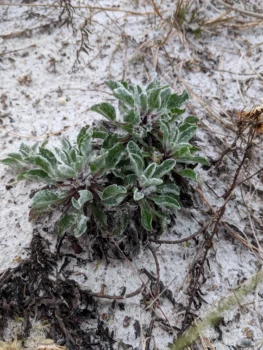
Godfrey’s Goldenaster: A Botanical Treasure Worth Protecting
Meet Godfrey’s goldenaster (Chrysopsis godfreyi), one of the Southeast’s most elusive native wildflowers. This rare perennial forb might not be on every gardener’s wish list, but it represents something incredibly special in the world of native plants – a living reminder of how precious and fragile our natural heritage can be.
A Plant with a Very Small Address
Godfrey’s goldenaster calls only two states home: Alabama and Florida. This extremely limited native range makes it one of the more geographically restricted plants in North America. Unlike its more widespread cousins in the aster family, this particular species has chosen to stick close to home, thriving only in very specific conditions within these southeastern states.
- Species observed
- No observations
Rarity Alert: Handle with Extreme Care
Here’s where things get serious, fellow plant lovers. Godfrey’s goldenaster carries a Global Conservation Status of S2, meaning it’s considered imperiled due to extreme rarity. In Alabama, it’s even more precarious with an S1 status – that’s conservation-speak for critically imperiled. We’re talking about a species with typically only 6 to 20 known occurrences and possibly fewer than 3,000 individual plants in existence.
What this means for gardeners: If you’re considering adding this plant to your garden, please proceed with extraordinary caution. Any plant material must be from absolutely verified, responsibly sourced origins – and honestly, finding legitimate sources will be nearly impossible given its rarity.
What Makes This Plant Special
As a native perennial forb, Godfrey’s goldenaster lacks the woody stems of shrubs and trees, instead growing as a herbaceous plant that returns year after year. Like other members of the aster family, it likely produces the characteristic daisy-like flowers that give goldenaster its name, though detailed descriptions of its appearance in cultivation are scarce due to its rarity.
The Growing Challenge
Here’s the honest truth: growing Godfrey’s goldenaster successfully would be extremely challenging for several reasons:
- Extremely limited availability of seeds or plants
- Highly specific growing requirements that aren’t well documented
- Potential legal and ethical concerns about disturbing wild populations
- Unknown adaptability to garden conditions
Better Alternatives for Your Native Garden
While we can’t recommend actively seeking out this rare species for your garden, you can still support native biodiversity by choosing related plants that are more common and garden-friendly. Consider these native alternatives:
- Aromatic aster (Symphyotrichum oblongifolium)
- New England aster (Symphyotrichum novae-angliae)
- Maryland golden-aster (Chrysopsis mariana)
- Grass-leaved goldenaster (Pityopsis graminifolia)
How You Can Help
The best way to support Godfrey’s goldenaster isn’t by trying to grow it, but by supporting conservation efforts:
- Donate to organizations working to protect rare native plants
- Support habitat conservation in Alabama and Florida
- Choose common native plants for your garden to support local ecosystems
- Spread awareness about the importance of plant conservation
The Takeaway
Godfrey’s goldenaster serves as a powerful reminder that not every beautiful native plant is meant for our gardens – and that’s okay. Sometimes the most important thing we can do as gardeners is simply know these species exist and work to protect the wild spaces where they thrive. By choosing more common native alternatives and supporting conservation efforts, we can all play a role in ensuring that future generations might still encounter this botanical treasure in its natural habitat.
Remember: the rarest plants often need the wildest places to survive, and sometimes our best garden choice is to let them be wild.