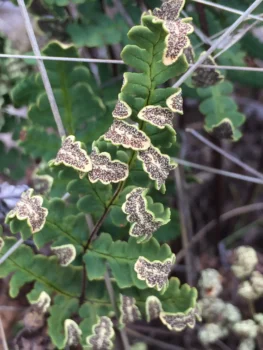
Goldback Fern: A Golden Treasure for Your Dry Shade Garden
Looking for a unique native fern that thrives where other plants struggle? Meet the goldback fern (Pentagramma triangularis triangularis), a charming little native that’s about to become your new favorite for those tricky dry, shady spots in your garden.
What Makes Goldback Fern Special
The goldback fern gets its common name from the stunning golden-yellow waxy powder that coats the undersides of its triangular fronds. This isn’t just for show – that golden farina helps the plant conserve moisture in its naturally dry habitats. The fronds themselves are small and distinctly triangular, creating an elegant, delicate appearance that adds texture and interest to any garden space.
Where It Calls Home
This perennial fern is a true native of western North America, naturally occurring in British Columbia, California, Idaho, Nevada, Oregon, and Washington. It’s perfectly adapted to the unique climate conditions of these regions, making it an excellent choice for gardeners looking to work with nature rather than against it.
- Species observed
- No observations
Why You’ll Want to Grow Goldback Fern
Here’s what makes this little fern a garden gem:
- Thrives in dry shade where many plants fail
- Extremely low water requirements once established
- Unique golden undersides add year-round visual interest
- Perfect for rock gardens and natural landscapes
- Requires virtually no maintenance
- Supports local ecosystems as a native species
Garden Design Ideas
Goldback fern shines in drought-tolerant gardens, native plant landscapes, and rock gardens. Its small size and distinctive triangular fronds make it perfect for tucking into rocky crevices, along stone walls, or as groundcover in dry, shaded areas under trees or large shrubs. It pairs beautifully with other native drought-tolerant plants and adds a soft, textural contrast to harder landscape elements.
Growing Conditions and Care
One of the best things about goldback fern is how easy it is to grow – as long as you give it what it naturally wants:
- Light: Partial to full shade
- Soil: Well-draining, rocky or sandy soil
- Water: Low water needs; drought tolerant once established
- Climate: Hardy in USDA zones 7-10
Planting and Care Tips
Getting your goldback fern established is straightforward:
- Plant in fall or early spring for best establishment
- Choose a spot with good drainage – avoid areas that stay wet
- Rocky crevices or sloped areas work particularly well
- Water sparingly during the first growing season
- Once established, it typically needs no supplemental watering
- No fertilization needed – it prefers lean soils
Important Conservation Note
Goldback fern has a conservation status that indicates some populations may be uncommon in certain areas. If you’re interested in adding this beauty to your garden, please make sure to purchase from reputable native plant nurseries that use responsibly sourced, nursery-propagated stock rather than wild-collected plants. This helps protect wild populations while still allowing you to enjoy this wonderful native species.
The Bottom Line
If you’ve been struggling to find plants for those challenging dry, shady spots, goldback fern might just be your answer. This low-maintenance native offers unique beauty, supports local ecosystems, and thrives where many other plants would simply give up. Plus, there’s something undeniably magical about discovering those golden undersides catching the light in your garden – it’s like finding hidden treasure every time you look.