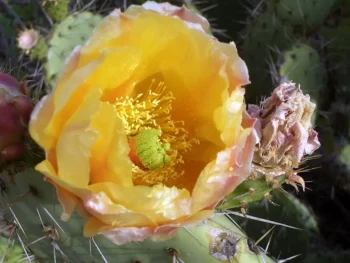
Golden Pricklypear: A Stunning Desert Native for Water-Wise Gardens
If you’re looking to add some southwestern flair to your drought-tolerant garden, the golden pricklypear (Opuntia aurea) might just be the perfect prickly companion you’ve been searching for. This charming cactus brings both beauty and resilience to landscapes that embrace water-wise gardening principles.
Meet the Golden Pricklypear
The golden pricklypear is a native perennial shrub that calls the American Southwest home. Despite being a cactus, it’s classified as a shrub due to its multi-stemmed growth pattern, typically staying under 13-16 feet in height (though most specimens remain much smaller in garden settings). What sets this species apart from its prickly pear cousins are its distinctive golden-yellow spines that give the plant its common name.
Where Does It Call Home?
This desert beauty is native to Arizona and Utah, where it thrives in the challenging conditions of the southwestern United States. In its natural habitat, you’ll find it growing in rocky desert soils and canyon areas, perfectly adapted to intense sun and minimal rainfall.
- Species observed
- No observations
Why Consider Golden Pricklypear for Your Garden?
There are several compelling reasons why this native cactus deserves a spot in the right garden:
- Stunning visual appeal: The golden spines create a beautiful contrast against the green pads, while bright yellow flowers appear in spring and early summer
- Pollinator magnet: Those cheerful yellow blooms attract bees and other beneficial pollinators to your garden
- Extremely drought tolerant: Once established, it requires virtually no supplemental watering
- Low maintenance: Perfect for gardeners who want beauty without the fuss
- Native plant benefits: Supporting local ecosystems and wildlife
Important Conservation Note
Before you rush out to find one, there’s something important to know: golden pricklypear has a vulnerable conservation status (S3), meaning it’s at risk in its natural habitat. If you decide to grow this beauty, please ensure you source it from reputable nurseries that propagate plants responsibly rather than collecting from wild populations.
Is It Right for Your Garden?
Golden pricklypear isn’t a plant for every garden, but it’s absolutely perfect for certain situations:
- Ideal for: Xeriscapes, desert-themed gardens, rock gardens, southwestern-style landscapes
- USDA Hardiness Zones: 5-9
- Best garden companions: Other drought-tolerant natives like desert marigold, penstemon, and desert willow
Growing Golden Pricklypear Successfully
Perfect Growing Conditions
Success with golden pricklypear comes down to mimicking its natural desert environment:
- Sunlight: Full sun is essential – this plant craves those intense rays
- Soil: Well-draining, sandy or rocky soil is crucial. Poor drainage is the fastest way to kill a pricklypear
- Water: Very low water needs once established. Overwatering is more dangerous than drought
Planting and Care Tips
Getting your golden pricklypear off to a good start is easier than you might think:
- Best planting time: Spring, after the last frost
- Soil preparation: Amend heavy soils with coarse sand and gravel to improve drainage
- Watering schedule: Water sparingly during the first growing season, then rely on natural rainfall
- Winter care: In colder zones, ensure excellent drainage to prevent freeze damage
- Handling tip: Always wear thick gloves and use tongs when working around the plant – those spines mean business!
The Bottom Line
Golden pricklypear is a fantastic choice for gardeners in appropriate climates who want a low-maintenance, drought-tolerant plant that supports native ecosystems. Its striking appearance and pollinator benefits make it a valuable addition to xeriscapes and desert-themed gardens. Just remember to source it responsibly due to its vulnerable status in the wild, and ensure your garden can provide the excellent drainage and full sun it requires to thrive.
If your garden isn’t quite right for this particular prickly beauty, consider other native drought-tolerant alternatives that might be better suited to your specific conditions and region.