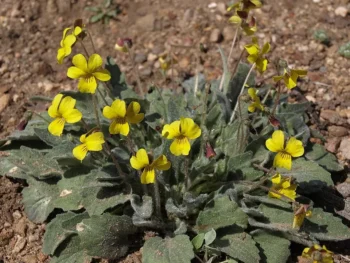
Golden Violet: A Rare Mountain Gem for Your Native Garden
If you’re looking to add a splash of sunshine to your rock garden or native landscape, the golden violet might just be the perfect choice. This charming little wildflower brings bright golden-yellow blooms and heart-shaped leaves to gardens lucky enough to host it. But before you rush to plant one, there’s something important you should know about this special native beauty.
What Makes Golden Violet Special
Golden violet (Viola aurea) is a native perennial forb that calls the mountain regions of California and Nevada home. Unlike its more common violet cousins, this species produces cheerful golden-yellow flowers marked with delicate dark veining that creates an almost painted appearance. The plant stays quite compact, typically reaching just 2-6 inches tall while spreading 4-8 inches wide, making it perfect for tucking into small spaces.
Where Golden Violet Grows Naturally
This lovely violet is native to the western United States, specifically found in California and Nevada’s mountainous regions. It’s perfectly adapted to the cooler climates and well-drained soils found at higher elevations, where it grows naturally among rocks and in open woodland areas.
- Species observed
- No observations
Important Conservation Note
Here’s where things get serious for a moment. Golden violet has a Global Conservation Status of S2S3, which means it’s considered rare and potentially vulnerable. If you decide to grow this beauty, please make sure you’re purchasing from reputable nurseries that propagate their plants responsibly rather than collecting from wild populations. Never collect plants or seeds from the wild yourself – let’s help protect the remaining natural populations of this special violet.
Why Grow Golden Violet in Your Garden
Beyond its obvious charm, golden violet offers several benefits to native gardeners:
- Supports native pollinators including small native bees and butterflies
- Provides early season color when many other plants are still waking up
- Requires minimal water once established, making it drought-tolerant
- Perfect size for rock gardens, alpine gardens, or as groundcover in woodland settings
- Adds authentic native character to California and Nevada landscapes
Best Growing Conditions
Golden violet thrives in conditions that mimic its mountain home:
- Sunlight: Partial shade to full sun
- Soil: Well-drained soils are essential – this plant won’t tolerate soggy conditions
- Climate: Cool mountain climates work best
- USDA Zones: Hardy in zones 5-8
- Water: Moderate water during establishment, then quite drought-tolerant
Planting and Care Tips
Getting your golden violet established successfully is fairly straightforward if you keep its mountain origins in mind:
- Plant in spring when soil can be worked
- Ensure excellent drainage – consider adding gravel or coarse sand to heavy soils
- Water regularly during the first growing season, then reduce watering significantly
- Mulch lightly around plants but keep mulch away from the crown
- Allow plants to form small colonies naturally over time
- Deadhead spent flowers if you want to prevent self-seeding (though seedlings are usually welcome!)
Perfect Garden Partners
Golden violet plays well with other native mountain plants. Consider pairing it with native sedums, penstemon species, or other California and Nevada natives that appreciate similar growing conditions. In rock gardens, it looks stunning nestled between stones where its golden flowers can really pop against the neutral backdrop.
The Bottom Line
Golden violet is a delightful addition to the right garden, especially if you’re creating a native landscape in California or Nevada. Its cheerful flowers, compact size, and pollinator benefits make it a winner. Just remember to source your plants responsibly and give them the well-drained conditions they crave. With proper care, you’ll be rewarded with years of golden blooms and the satisfaction of growing a truly special native plant.