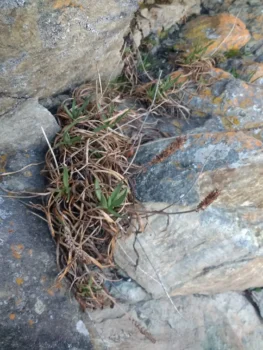
Goose Tongue: A Hardy Coastal Native Worth Considering
Meet goose tongue (Plantago maritima var. juncoides), a tough little coastal plant that’s been quietly thriving in some of North America’s harshest environments for centuries. While it might not win any beauty contests, this unassuming perennial has some impressive credentials that make it worth a second look for the right gardening situation.
What Exactly Is Goose Tongue?
Goose tongue is a perennial forb—basically a non-woody herbaceous plant that comes back year after year. It forms low-growing rosettes of narrow, fleshy leaves that somewhat resemble, well, a goose’s tongue (hence the charming common name). The plant produces small, inconspicuous flower spikes that might not catch your eye, but they’re perfectly adapted to their coastal lifestyle.
Where Does It Call Home?
This hardy native has an impressive range across North America. You’ll find goose tongue naturally occurring from Alaska down through Canada and into many northern U.S. states. It spans coast to coast, thriving in places like:
- Canadian provinces: Alberta, British Columbia, Manitoba, New Brunswick, Nova Scotia, Ontario, Prince Edward Island, Quebec, Saskatchewan, Yukon, Northwest Territories, and Nunavut
- U.S. states: Alaska, California, Connecticut, Maine, Massachusetts, New Hampshire, New Jersey, New York, Oregon, Rhode Island, Virginia, and Washington
- Even extends into Greenland and St. Pierre and Miquelon
- Species observed
- No observations
A Word About Rarity
Here’s something important to know: in New Jersey, goose tongue has a rarity status of S2, meaning it’s imperiled in the state. If you’re considering adding this plant to your garden, please make sure you source it responsibly from reputable native plant nurseries rather than collecting from wild populations.
Should You Grow Goose Tongue?
Let’s be honest—goose tongue isn’t going to be the star of your flower border. Its aesthetic appeal is subtle at best, with its low rosettes of narrow leaves and unremarkable flower spikes. However, there are some compelling reasons you might want to consider it:
The Good: It’s incredibly hardy (surviving in USDA zones 2-7), truly native across a vast range, and perfect for challenging coastal conditions where other plants struggle. If you have salty, alkaline soil or live near the coast, this could be your garden hero.
The Challenging: Goose tongue is quite particular about its growing conditions. It thrives in saline environments and can be difficult to establish in typical garden settings. It’s not the plant for rich, fertile garden beds—it actually prefers the harsh conditions that would stress out most other plants.
Perfect Growing Conditions
Goose tongue is all about that coastal lifestyle. Here’s what it needs to thrive:
- Soil: Saline, alkaline, or sandy soils that drain well
- Sun: Full sun exposure
- Water: Once established, it’s quite drought-tolerant
- Climate: Cold hardy and salt-tolerant
Where It Fits in Your Landscape
Goose tongue works best in specialized situations:
- Coastal gardens where salt spray is common
- Naturalized areas mimicking coastal prairie or marsh edges
- Rock gardens with alkaline conditions
- Areas with road salt exposure
- Native plant gardens focused on regional flora
Planting and Care Tips
Successfully growing goose tongue requires thinking like the plant:
- Start with seeds or plants from reputable native plant sources
- Avoid rich, organic soils—this plant prefers lean conditions
- Ensure excellent drainage; waterlogged conditions are a no-go
- Once established, leave it alone—it doesn’t need pampering
- Consider adding sand or salt to your soil if you’re trying to replicate coastal conditions
Wildlife and Ecological Benefits
While goose tongue might not be a pollinator magnet (it’s wind-pollinated), it plays an important role in coastal ecosystems. It helps stabilize soil in harsh environments and provides habitat structure in areas where few other plants can survive.
The Bottom Line
Goose tongue isn’t for everyone, but for gardeners dealing with coastal conditions, salty soils, or those passionate about growing truly native plants, it’s worth considering. Just remember to source it responsibly, especially if you’re in areas where it’s rare. This is definitely a right plant, right place situation—get those conditions right, and you’ll have a tough, reliable native that connects your garden to the wild coastal landscapes of North America.