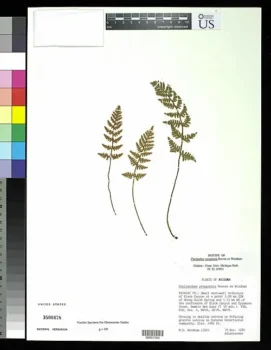
Graceful Lipfern: A Delicate Desert Beauty for Specialized Gardens
Meet the graceful lipfern (Cheilanthes yavapensis), a charming little fern that’s perfectly adapted to life in the American Southwest. Unlike the lush, moisture-loving ferns you might picture in a woodland garden, this delicate beauty has mastered the art of thriving in some pretty tough conditions. If you’re looking to add a touch of unexpected elegance to your drought-tolerant landscape, this native gem might just be your new favorite plant.
What Makes Graceful Lipfern Special?
This perennial fern is a true southwestern native, calling Arizona, New Mexico, and Texas home. As a forb (that’s botanist-speak for a non-woody plant), it stays relatively small and manageable, making it perfect for gardeners who want the intricate beauty of ferns without the space requirements of larger species.
- Species observed
- No observations
A Word About Rarity
Here’s something important to know: graceful lipfern has a conservation status that’s a bit uncertain, which means we should treat it with extra care. If you’re interested in growing this plant, please make sure you’re getting it from a reputable nursery that propagates their own stock rather than collecting from wild populations. Responsible sourcing helps protect native populations while still allowing us to enjoy these beautiful plants in our gardens.
Garden Appeal and Design Uses
Don’t let its delicate appearance fool you – this little fern packs a visual punch! The graceful lipfern features:
- Lacy, finely-divided fronds that create beautiful texture
- Compact growth that won’t overwhelm smaller spaces
- Excellent drought tolerance once established
- Year-round interest in warmer climates
It’s absolutely perfect for rock gardens, where it can nestle into crevices and create stunning contrasts against stone. Desert landscaping projects benefit enormously from its ability to add softness and movement to otherwise stark compositions.
Where Does It Thrive?
Graceful lipfern is happiest in USDA hardiness zones 7-10, making it suitable for much of the southern and southwestern United States. It’s particularly well-suited for:
- Xerophytic (drought-adapted) gardens
- Rock and alpine gardens
- Native plant landscapes
- Desert-themed designs
Growing Graceful Lipfern Successfully
The key to success with this fern is remembering where it comes from. Think desert oasis rather than tropical rainforest. Here’s what it needs:
Soil Requirements: Excellent drainage is absolutely crucial. Rocky, sandy, or gravelly soils work best. Heavy clay or constantly moist soil will likely spell disaster for your graceful lipfern.
Light Conditions: Full sun to partial shade works well, though some afternoon shade in extremely hot climates can be beneficial.
Watering: Once established, this fern is remarkably drought-tolerant. Water deeply but infrequently, allowing the soil to dry out between waterings. Overwatering is probably the fastest way to lose this plant.
Planting and Care Tips
When planting graceful lipfern, choose your location carefully. Amend heavy soils with coarse sand, perlite, or small gravel to improve drainage. Plant at the same depth it was growing in its container, and water gently to settle the soil.
During the establishment period (the first growing season), provide occasional deep watering during extended dry spells. After that, natural rainfall should be sufficient in most areas where it’s hardy.
Wildlife and Ecological Benefits
While graceful lipfern doesn’t produce flowers to attract pollinators, it still contributes to garden ecosystems in subtle ways. Its small stature provides micro-habitat for tiny beneficial insects, and its presence helps create the diverse plant communities that support overall garden health.
As a native plant, it’s also an important part of preserving regional biodiversity and supporting the complex web of relationships between plants, soil organisms, and wildlife that make southwestern ecosystems so special.
Is Graceful Lipfern Right for Your Garden?
This charming fern is perfect if you’re looking to add texture and interest to a drought-tolerant landscape, especially if you’re passionate about native plants and conservation. However, it’s definitely a specialty plant that requires specific conditions to thrive.
Consider graceful lipfern if you have well-draining soil, live in an appropriate climate zone, and appreciate plants that offer subtle beauty rather than showy blooms. Just remember to source it responsibly and give it the drainage it craves, and you’ll have a unique and lovely addition to your southwestern garden palette.