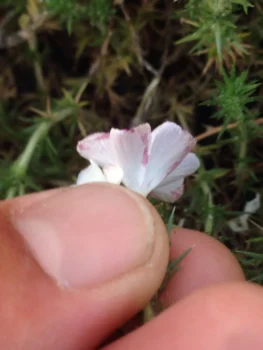
Granite Prickly Phlox: A Hardy Native Wildflower for Challenging Sites
If you’re searching for a tough-as-nails native plant that laughs in the face of drought and poor soil, meet granite prickly phlox (Linanthus pungens). This scrappy little perennial might not win any beauty contests, but it’s got character in spades and can thrive where other plants throw in the towel.
What is Granite Prickly Phlox?
Granite prickly phlox is a native North American wildflower that belongs to the phlox family. Despite its intimidating name, this perennial herb is more resilient than prickly. Growing up to 2 feet tall with a sprawling, decumbent growth habit, it forms a low-growing mat of fine-textured green foliage topped with small white flowers in late spring.
This plant is a true native, naturally occurring across a impressive range that includes British Columbia and 12 U.S. states: Arizona, California, Colorado, Idaho, Maryland, Montana, Nevada, New Mexico, Oregon, Utah, Washington, and Wyoming. From mountain slopes to desert edges, granite prickly phlox has adapted to some of North America’s most challenging environments.
- Species observed
- No observations
Why Consider Granite Prickly Phlox for Your Garden?
Here’s where this unassuming plant really shines:
- Extreme drought tolerance: Once established, it needs minimal water
- Low maintenance: Requires little to no fertilizer and thrives in poor soils
- Climate adaptable: Hardy in USDA zones 3-8, tolerating temperatures down to -33°F
- Native ecosystem support: Provides habitat and likely supports native pollinators
- Versatile placement: Tolerates both full sun and partial shade
Perfect Garden Situations
Granite prickly phlox excels in:
- Rock gardens: Its low, spreading habit looks natural among stones
- Xeriscape designs: Perfect for water-wise landscaping
- Naturalized areas: Ideal for meadow or prairie restoration projects
- Problem spots: Thrives where other plants struggle with poor, dry soil
- Native plant gardens: A authentic choice for regional native landscapes
Growing Conditions and Care
This plant’s secret to success lies in understanding its natural habitat preferences:
- Soil: Prefers coarse to medium-textured, well-draining soils; avoid heavy clay
- pH: Adaptable to slightly acidic to slightly alkaline conditions (pH 6.0-8.0)
- Water: Low water needs once established; actually prefers dry conditions
- Light: Full sun to partial shade tolerant
- Climate: Needs at least 90 frost-free days; handles cold winters well
Planting and Establishment Tips
Growing granite prickly phlox requires patience, but the results are worth it:
- Propagation: Grown from seed (requires cold stratification) or container plants
- Growth rate: Moderate establishment; slow to spread naturally
- Spacing: Plant 1,700-4,800 plants per acre for restoration projects
- First year care: Provide occasional water during establishment, then reduce
- Long-term maintenance: Virtually maintenance-free once established
Important Considerations
Before you get too excited about adding this plant to your garden, there are a few things to keep in mind. Granite prickly phlox has a somewhat unclear conservation status and appears to have very limited commercial availability. This means you’re unlikely to find it at your local nursery.
If you do locate a source, make sure it’s from a reputable native plant supplier who uses responsibly collected or propagated material. Never collect plants from the wild, as this can harm natural populations.
The Bottom Line
Granite prickly phlox might not be the showiest plant in the native garden, but it’s undeniably useful for challenging sites where few other plants can survive and thrive. Its combination of drought tolerance, cold hardiness, and native status makes it valuable for restoration projects and specialized garden situations.
While its limited availability means it won’t be the centerpiece of most home gardens, it’s worth seeking out for those special spots where you need a truly tough native plant that can handle whatever nature throws at it. Just remember to source it responsibly and give it the well-draining, low-fertility conditions it craves.