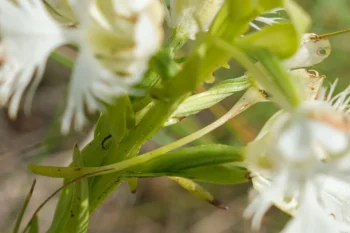
Great Plains White Fringed Orchid: A Prairie Treasure Worth Protecting
Have you ever stumbled upon a plant so stunning it takes your breath away? The Great Plains white fringed orchid (Platanthera praeclara) is exactly that kind of botanical showstopper. This remarkable native orchid graces the prairies of North America with its ethereal white blooms, but there’s much more to this story than meets the eye.
What Makes This Orchid Special
The Great Plains white fringed orchid is a perennial forb that belongs to our precious native flora. Standing tall at 3-4 feet when in bloom, this elegant orchid produces spectacular spikes of pristine white flowers adorned with distinctive fringed petals. The blooms appear in mid to late summer, releasing a sweet fragrance that attracts nocturnal pollinators like sphinx moths.
You might also encounter this species listed under its synonym, Habenaria leucophaea var. praeclara, in older botanical references.
Where to Find This Prairie Gem
This orchid calls the Great Plains home, naturally occurring across a range that includes Manitoba in Canada and extends through Iowa, Kansas, Minnesota, Missouri, Nebraska, North Dakota, Oklahoma, South Dakota, and Wyoming in the United States. It thrives in the unique ecosystem conditions found in these prairie regions.
- Species observed
- No observations
A Word of Caution: Rarity Matters
Here’s where things get serious. The Great Plains white fringed orchid carries a global conservation status of S3 (Vulnerable) and is listed as Threatened in the United States. This means we’re talking about a species that’s genuinely at risk, with typically only 21 to 100 known occurrences and between 3,000 to 10,000 individuals remaining in the wild.
What does this mean for you as a gardener? Simply put, this isn’t a plant you should attempt to dig up from the wild or purchase from questionable sources. Instead, consider it a species to admire, protect, and support through habitat conservation efforts.
Growing Conditions and Habitat Needs
Understanding where this orchid naturally grows helps explain why it’s so challenging to cultivate:
- Moisture: Classified as a Facultative Wetland plant across all its native regions, meaning it usually occurs in wetlands but may also grow in non-wetland areas
- Light: Prefers full sun to partial shade conditions
- Soil: Thrives in moist to wet, calcareous soils with specific pH requirements
- Climate: Hardy in USDA zones 3-7, adapted to prairie climate conditions
- Partnerships: Requires specific mycorrhizal fungal relationships to survive and thrive
Why This Orchid is Nearly Impossible to Grow
Let’s be honest – this isn’t your typical garden center perennial. Native orchids like the Great Plains white fringed orchid have incredibly complex ecological requirements that make them extremely difficult to cultivate successfully. They depend on specific soil fungi, precise moisture conditions, and intricate ecological relationships that are nearly impossible to replicate in typical garden settings.
Pollinator and Wildlife Benefits
In its natural habitat, this orchid serves as an important nectar source for sphinx moths and other nocturnal pollinators. The timing of its bloom and the structure of its fringed flowers have evolved specifically to attract these nighttime visitors, making it a crucial component of prairie ecosystem health.
How You Can Help
Rather than attempting to grow this rare orchid, consider these meaningful alternatives:
- Support local prairie restoration projects
- Visit natural areas where these orchids grow (and admire them from a respectful distance)
- Choose other native prairie plants that support similar pollinators
- Donate to organizations working on orchid conservation
- Create habitat corridors using appropriate native plants
The Bottom Line
The Great Plains white fringed orchid represents the wild beauty and ecological complexity of North American prairies. While we can’t easily bring this treasure into our gardens, we can appreciate its role in nature and work to protect the habitats where it thrives. Sometimes the most meaningful way to grow a plant is to ensure it has a safe place to grow wild.
If you’re passionate about native orchids, consider connecting with local botanical societies or conservation groups. They often organize viewing trips during blooming season and can guide you to locations where you can witness these magnificent plants in their natural glory – exactly where they belong.