Greek Valerian: A Charming Native Wildflower for Shade Gardens
If you’re looking for a delicate spring bloomer that thrives in shade, Greek valerian (Polemonium reptans) might just be the perfect addition to your native garden. This charming perennial wildflower brings soft blue blooms and feathery foliage to woodland settings, creating a naturalized look that both you and local pollinators will love.
What is Greek Valerian?
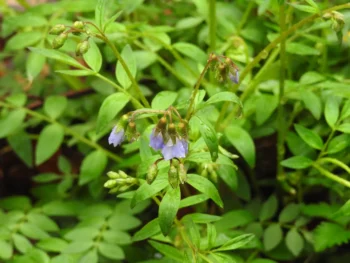
Greek valerian is a native North American perennial herb that belongs to the phlox family. Despite its common name, this plant has no connection to Greece – it’s as American as apple pie! This low-growing forb produces delicate, bell-shaped flowers in shades of blue to lavender, held above attractive compound leaves that give the plant a soft, feathery appearance.
Where Does Greek Valerian Grow Naturally?
This versatile native has quite an impressive range across North America. You’ll find Greek valerian growing naturally from southeastern Canada down to Georgia and as far west as Kansas and Minnesota. It thrives in states including Alabama, Arkansas, Connecticut, Delaware, Georgia, Illinois, Indiana, Iowa, Kansas, Kentucky, Maryland, Massachusetts, Michigan, Minnesota, Mississippi, Missouri, New Hampshire, New Jersey, New York, North Carolina, Ohio, Oklahoma, Pennsylvania, Rhode Island, South Dakota, Tennessee, Vermont, Virginia, West Virginia, and Wisconsin, plus Ontario and Quebec in Canada.
- Species observed
- No observations
A Note About Rarity
While Greek valerian has a wide natural range, it’s worth noting that this species is considered endangered in New Jersey, where it has a rarity status of S1 (critically imperiled). If you live in New Jersey or other areas where the plant may be uncommon, make sure to purchase your plants from reputable nurseries that ethically source their native plants rather than collecting from wild populations.
Why Grow Greek Valerian?
There are plenty of reasons to fall in love with this native beauty:
- Early spring color: Greek valerian blooms in late spring to early summer when many shade plants are just getting started
- Pollinator magnet: The flowers attract bees, butterflies, and other beneficial insects
- Low maintenance: Once established, this plant pretty much takes care of itself
- Adaptable: It can handle various moisture levels, from dry to moderately wet conditions
- Natural spreader: Greek valerian self-seeds readily, creating lovely naturalized colonies over time
Perfect Garden Companions
Greek valerian shines in woodland gardens, shade borders, and naturalized areas. It pairs beautifully with other native shade lovers like wild ginger, bloodroot, trout lily, and ferns. The plant works wonderfully as a groundcover in areas where grass struggles to grow, and its soft texture provides a nice contrast to plants with broader leaves.
Growing Conditions and Care
The great news about Greek valerian is that it’s remarkably easy to grow. Here’s what this adaptable native prefers:
- Light: Partial to full shade (morning sun with afternoon shade is ideal)
- Soil: Well-draining soil that retains some moisture; tolerates various soil types
- Water: Moderate moisture; can handle both somewhat dry and occasionally wet conditions
- Hardiness: Thrives in USDA zones 3-8
Planting and Care Tips
Getting Greek valerian established in your garden is straightforward:
- Plant in spring or fall when temperatures are cool
- Space plants about 12-18 inches apart
- Add organic mulch around plants to retain moisture and suppress weeds
- Don’t worry if plants go dormant during hot summer weather – they’ll bounce back in fall
- Allow some flowers to go to seed if you want the plant to naturalize
- Minimal fertilization needed – these plants prefer lean conditions
What to Expect
Greek valerian typically grows 12-18 inches tall and spreads slowly to form small colonies. The compound leaves emerge early in spring, followed by loose clusters of blue to lavender bell-shaped flowers. After blooming, the plant may go semi-dormant during the hottest part of summer, especially in warmer climates, but will often produce fresh growth in fall.
This native wildflower is perfect for gardeners who want to support local ecosystems while adding gentle beauty to shaded areas. With its low-maintenance nature and ability to self-seed, Greek valerian can become a cherished part of your native garden for years to come.