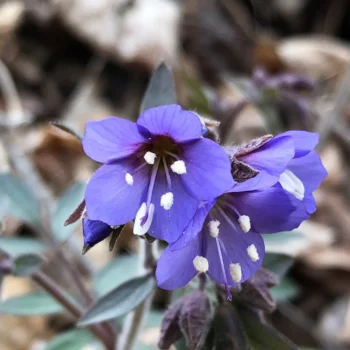
Greek Valerian: A Rare Native Gem for Specialized Gardens
Meet Polemonium reptans var. villosum, a charming native perennial that goes by the lovely name Greek valerian. While this plant might not be on every gardener’s radar, it’s a special variety that deserves attention from native plant enthusiasts and collectors who appreciate botanical rarities.
What Makes This Plant Special
Greek valerian is a perennial forb herb, meaning it’s a non-woody plant that dies back to the ground each winter and returns the following spring. As a native species to the lower 48 states, it represents an authentic piece of American flora that has been growing in our landscapes long before European settlement.
This particular variety is quite rare, with a global conservation status of S5T3T4. What this means in plain language is that while the parent species may be relatively secure, this specific variety is uncommon and deserves our conservation attention.
Where You’ll Find It Growing Wild
In nature, Polemonium reptans var. villosum calls Kentucky and Ohio home. Its limited native range makes it a true regional specialty, perfectly adapted to the specific conditions found in these areas.
- Species observed
- No observations
Should You Grow Greek Valerian?
The answer depends on your gardening goals and ethics. Here’s what you should consider:
- For native plant enthusiasts: This is an excellent choice if you’re creating authentic regional landscapes in Kentucky or Ohio
- For conservation-minded gardeners: Growing this rare variety can help preserve genetic diversity, but only if you source it responsibly
- For collectors: Its rarity makes it a prized addition to specialized native plant collections
The Responsible Sourcing Challenge
Here’s the important part: because this variety is rare, you absolutely must source it responsibly. Never collect from wild populations, and always purchase from reputable native plant nurseries that can verify their stock comes from ethical propagation rather than wild collection. Many rare plants have been further endangered by over-collection, so let’s be part of the solution, not the problem.
Growing Conditions and Care
While specific growing information for this variety is limited, we can make educated guesses based on its close relationship to other Polemonium species and its native habitat in Kentucky and Ohio. These plants typically prefer:
- Partially shaded locations
- Moist, well-draining soil
- Cool, temperate conditions
- Protection from harsh afternoon sun
As a perennial, Greek valerian will establish a root system and return year after year, making it a low-maintenance addition once established.
Garden Design Ideas
This rare native works beautifully in:
- Native plant gardens focused on regional flora
- Woodland gardens with dappled shade
- Conservation collections
- Educational gardens showcasing local biodiversity
The Bottom Line
Polemonium reptans var. villosum is a plant for the thoughtful gardener who values conservation and regional authenticity. While it may not provide the showstopping blooms of more common perennials, it offers something perhaps more valuable: a living connection to the unique natural heritage of Kentucky and Ohio.
If you decide to grow this rare beauty, remember that you’re becoming a steward of botanical diversity. Source responsibly, grow it well, and perhaps even share seeds or divisions with other conservation-minded gardeners to help ensure this special variety continues to thrive for future generations.