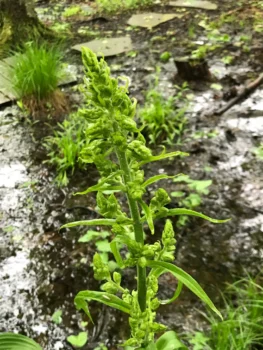
Green False Hellebore: A Dramatic Native with a Dark Secret
If you’re looking for a plant that commands attention in the garden, green false hellebore might just fit the bill. This towering North American native brings serious architectural drama to shady spots, but there’s something you absolutely need to know before you consider adding it to your landscape.
What is Green False Hellebore?
Green false hellebore (Veratrum viride) is a perennial forb that’s as impressive as it is intimidating. This native plant belongs to the group of herbaceous perennials – meaning it lacks woody stems but comes back year after year from its underground parts. Don’t let the herb classification fool you though; this is definitely not something you’d want in your kitchen garden!
You might also encounter this plant listed under several synonyms in older references, including Veratrum eschscholtzianum and Veratrum eschscholtzii, but they all refer to the same species.
Where Does Green False Hellebore Call Home?
This remarkable native has one of the most impressive natural ranges you’ll find. Green false hellebore is native to Alaska, Canada, and the lower 48 states, growing naturally across a vast territory that includes Alberta, Alabama, British Columbia, Alaska, New Brunswick, California, Connecticut, Quebec, Delaware, District of Columbia, Yukon, Northwest Territories, Georgia, Idaho, Maine, Maryland, Massachusetts, Montana, New Hampshire, New Jersey, New York, North Carolina, Ohio, Oregon, Pennsylvania, Rhode Island, Tennessee, Vermont, Virginia, Washington, West Virginia, Wyoming, and Labrador.
- Species observed
- No observations
The Visual Impact: Beauty with a Bold Statement
Green false hellebore is nothing if not dramatic. This architectural giant can reach 3-8 feet tall and 2-4 feet wide, making it a true statement plant. The large, deeply pleated leaves emerge in spring like giant fans, creating an almost tropical appearance that seems almost too lush for temperate climates. In mid to late summer, tall flower spikes rise above the foliage, bearing clusters of small, star-shaped greenish flowers that can extend the plant’s height even further.
The growth rate is relatively slow, so patience is required, but the payoff is worth it. This plant grows as a dramatic clump that only gets more impressive with age.
Garden Role and Landscape Use
Green false hellebore excels as an accent plant in woodland gardens, shade gardens, and naturalistic plantings. Its bold foliage and towering presence make it perfect for:
- Creating focal points in shaded areas
- Adding height and structure to woodland borders
- Providing dramatic backdrops for smaller shade plants
- Naturalizing in bog gardens or consistently moist areas
This plant thrives in USDA hardiness zones 3-8, making it suitable for most temperate regions.
Growing Conditions: Moisture is Key
Green false hellebore has some specific preferences that you’ll need to meet for success:
- Light: Partial to full shade
- Soil: Rich, consistently moist to wet soil
- Moisture: High – this plant does not tolerate drought
- pH: Slightly acidic to neutral
The wetland status varies by region, but generally, this plant usually occurs in wetland conditions, though it can sometimes be found in non-wetland areas with consistently moist soil.
Wildlife and Pollinator Benefits
The flowers of green false hellebore attract various pollinators, particularly flies and small beetles. However, the plant’s extreme toxicity means that most wildlife, including deer and rabbits, will avoid it entirely – which can be seen as either a benefit or a limitation depending on your garden goals.
The Serious Caveat: Toxicity Concerns
Here’s the crucial information every gardener needs to know: All parts of green false hellebore are extremely toxic to humans, pets, and livestock. This plant contains powerful alkaloids that can cause severe poisoning or even death if ingested. Even handling the plant can potentially cause skin irritation in sensitive individuals.
This toxicity factor is why many gardeners, particularly those with children or pets, may want to admire this plant in its natural habitat rather than bring it home.
Planting and Care Tips
If you decide this plant is right for your situation, here are some care guidelines:
- Planting: Choose a consistently moist, shaded location with rich soil
- Watering: Maintain consistent moisture – never let the soil dry out
- Fertilizing: A spring application of compost or organic fertilizer will support growth
- Maintenance: Remove spent flower stalks if desired, but the plant is generally low-maintenance
- Safety: Always wear gloves when handling, and keep away from children and pets
Should You Plant Green False Hellebore?
Green false hellebore is undeniably spectacular, and as a native plant, it has legitimate ecological value. However, the decision to grow it should be made carefully, weighing its dramatic beauty against its serious safety concerns.
Consider planting if: You have a suitable moist, shaded location away from children and pets, and you appreciate bold, architectural plants in the landscape.
Consider alternatives if: You have young children, pets, or concerns about plant toxicity. Some safer native alternatives for dramatic shade impact include wild ginger, mayapple, or various native ferns.
Whatever you decide, green false hellebore remains one of our most impressive native plants – just one that demands respect and careful consideration before welcoming it into your garden.