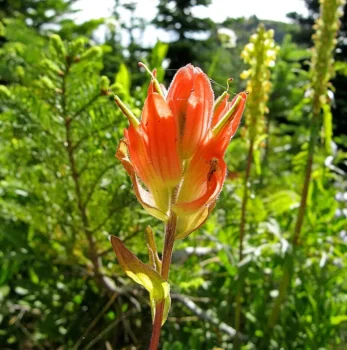
Green Indian Paintbrush: A Rare Alaska Native That May Be Lost to Time
If you’ve stumbled across the name green Indian paintbrush in your native plant research, you’ve discovered one of Alaska’s most elusive botanical mysteries. Castilleja chrymactis isn’t just rare—it might be gone entirely, making it one of those plants that captures the imagination precisely because we may never see it again.
What Is Green Indian Paintbrush?
Green Indian paintbrush is a perennial wildflower that belongs to the paintbrush family, known scientifically as Castilleja chrymactis (you might also see it listed under its synonym, Castilleja leschkeana). Unlike its showier red and orange paintbrush cousins that dot western landscapes, this particular species was known for its more subdued, greenish appearance.
As a forb—basically a fancy term for a soft-stemmed flowering plant—green Indian paintbrush lacks the woody tissue of shrubs and trees, instead growing as an herbaceous perennial that would return each year from underground parts.
Where Did It Call Home?
This paintbrush was exclusively Alaskan, making it a true endemic species. Its entire known range was limited to Alaska, though exactly where in the vast state it grew remains part of its mystery.
- Species observed
- No observations
The Conservation Reality Check
Here’s the important part: Green Indian paintbrush has a conservation status of Possibly Extirpated, which is conservation speak for we haven’t seen it in a really long time, but we’re still hoping someone might find it again. This puts it in botanical limbo—not quite declared extinct, but certainly missing in action.
What this means for gardeners is simple: you probably can’t grow this plant, and you definitely shouldn’t try to hunt for it in the wild. If by some miracle you encounter seeds or plants labeled as Castilleja chrymactis, proceed with extreme caution and verify the source thoroughly.
Growing Conditions (If It Still Exists)
Based on what we know about its habitat preferences, green Indian paintbrush was likely:
- Facultative regarding wetland conditions (meaning it could handle both wet and drier soils)
- Adapted to Alaska’s challenging climate
- Probably hardy to very cold temperatures, given its native range
However, the specific growing requirements—soil type, light needs, water preferences—remain largely unknown due to limited study before its apparent disappearance.
Why This Plant Matters
Even though you can’t add green Indian paintbrush to your garden, its story serves as a powerful reminder of what we can lose when plant populations become too small or isolated. Alaska’s unique flora includes many species found nowhere else on Earth, and each loss represents an irreplaceable piece of natural heritage.
Better Alternatives for Your Garden
If you’re drawn to the idea of growing paintbrush species, consider these more available options:
- Scarlet paintbrush (Castilleja coccinea) for eastern gardens
- Indian paintbrush (Castilleja miniata) for western regions
- Prairie paintbrush (Castilleja sessiliflora) for prairie gardens
Each of these species offers the unique charm of paintbrush flowers while being much more obtainable and better understood in terms of cultivation needs.
The Takeaway
Green Indian paintbrush represents one of botany’s cautionary tales—a plant that may have slipped away before we fully understood it. While this makes it impossible to recommend for cultivation, it does underscore the importance of protecting and studying native plants while we still can. Sometimes the most valuable plants are the ones that remind us what we stand to lose.
If you’re passionate about Alaska native plants, focus your energy on species that are still thriving and available through reputable native plant sources. Every garden filled with thriving native species is a small act of conservation—and a hedge against future losses like the mysterious green Indian paintbrush.