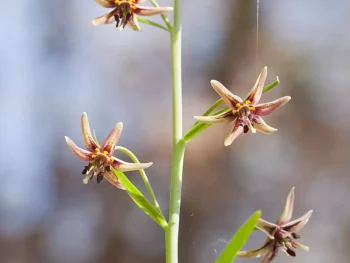
Greenhorn Fritillary: A Rare California Native Worth Protecting in Your Garden
If you’re passionate about California native plants and love supporting rare species, the greenhorn fritillary (Fritillaria brandegeei) might just capture your heart. This delicate spring bloomer is a true California treasure, though one that comes with important conservation considerations every gardener should understand.
What Makes Greenhorn Fritillary Special
The greenhorn fritillary is a perennial bulb that belongs to the lily family, producing charming nodding bell-shaped flowers in early spring. These modest blooms typically display purple-brown or greenish hues, creating a subtle but captivating display in the garden. As a forb—essentially a non-woody flowering plant—it emerges from the ground each spring, blooms, then retreats underground for its summer dormancy period.
You might occasionally see this plant listed under its botanical synonym, Fritillaria hutchinsonii, but greenhorn fritillary remains the accepted name for this species.
A True California Endemic
This fritillary is exclusively native to California, making it a perfect choice for gardeners committed to growing truly local plants. Its natural range is quite limited, found primarily in the Sierra Nevada foothills where it has adapted to the region’s unique Mediterranean climate.
- Species observed
- No observations
Important Conservation Alert
Here’s where things get serious: greenhorn fritillary has a Global Conservation Status of S2, meaning it’s imperiled due to extreme rarity. With typically only 6 to 20 known occurrences and possibly as few as 1,000 to 3,000 individual plants remaining in the wild, this species is genuinely at risk.
If you choose to grow greenhorn fritillary, please only obtain bulbs from reputable native plant nurseries that practice ethical propagation. Never collect from wild populations—this could contribute to the species’ decline.
Garden Role and Landscape Uses
When grown responsibly, greenhorn fritillary can play several valuable roles in your landscape:
- Perfect for native California plant gardens
- Excellent in rock gardens where its modest size won’t be overwhelmed
- Ideal for naturalized woodland areas
- Great companion for other California native bulbs and wildflowers
Growing Conditions and Care
Like most California natives, greenhorn fritillary thrives with conditions that mimic its natural habitat:
- Sunlight: Partial shade to full sun
- Soil: Well-draining soils are essential—these bulbs will rot in waterlogged conditions
- Water: Moderate water during growing season, dry summers during dormancy
- Climate: Suitable for USDA hardiness zones 7-9
Planting and Care Tips
Success with greenhorn fritillary comes down to respecting its natural rhythm:
- Plant bulbs in fall, just as you would other spring-blooming bulbs
- Allow the plant to go completely dormant in summer—resist the urge to water during this period
- Provide minimal supplemental water once dormant
- Let foliage die back naturally to nourish the bulb for next year’s growth
Supporting Pollinators
Despite its small stature, greenhorn fritillary provides valuable nectar for early spring pollinators when few other flowers are available. By growing this native species, you’re supporting the complex web of relationships that keep California’s ecosystems healthy.
The Bottom Line
Greenhorn fritillary represents both an opportunity and a responsibility. It’s a chance to grow a genuinely rare California native that supports local pollinators and preserves genetic diversity in our gardens. However, it also requires us to be thoughtful consumers who prioritize conservation over collection.
If you can source this plant ethically and provide the well-draining, summer-dry conditions it needs, greenhorn fritillary can be a meaningful addition to your native plant garden. Just remember—we’re not just growing a plant, we’re helping preserve a piece of California’s natural heritage for future generations.