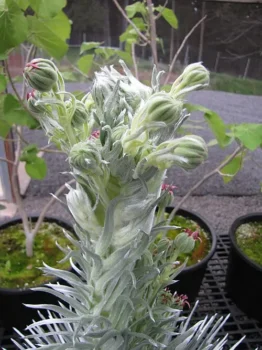
The Elusive Greensword: A Hawaiian Treasure on the Brink
Meet the greensword (Argyroxiphium virescens), one of Hawaii’s most mysterious and critically rare native plants. This remarkable perennial shrub once graced the slopes of Maui’s Haleakalā, but today it exists in a precarious state that should give any gardener pause before considering it for their landscape.
What Makes the Greensword Special
The greensword is a true Hawaiian endemic, meaning it exists naturally nowhere else on Earth. This striking plant belongs to the silversword alliance, a group of plants that have evolved unique adaptations to survive in Hawaii’s harsh high-elevation environments. With its distinctive sword-shaped, silvery-green leaves arranged in an elegant rosette pattern, the greensword creates a dramatic architectural presence that’s unlike anything you’ll find in typical mainland gardens.
As a perennial shrub, the greensword can develop multiple stems and typically stays under 13-16 feet in height, though environmental conditions can influence its final size and form.
Where It Calls Home
The greensword is native exclusively to Hawaii, with its historical range centered on the island of Maui. This plant evolved to thrive in the unique conditions found on volcanic slopes, particularly in the Haleakalā region.
- Species observed
- No observations
A Critical Conservation Concern
Here’s where things get serious, fellow gardeners. The greensword carries a Global Conservation Status of SH, which means it’s Possibly Extirpated – known only from historical records with just a glimmer of hope for rediscovery. In plain English, this plant might already be extinct in the wild.
What this means for gardeners: We strongly recommend against attempting to grow this species unless you’re working with legitimate conservation organizations using responsibly sourced material. The greensword’s rarity makes it a plant that belongs in conservation efforts, not private gardens.
Growing Conditions (For Conservation Context Only)
Understanding the greensword’s natural habitat helps explain why it’s so challenging to cultivate and why it’s become so rare:
- Elevation: High-altitude volcanic slopes
- Climate: Cool temperatures with high UV exposure
- Soil: Well-draining volcanic soils with specific mineral content
- Hardiness: USDA zones 10-11, but requires very specific microclimates
Better Alternatives for Your Garden
If you’re drawn to the unique beauty of Hawaiian native plants, consider these more readily available alternatives that won’t contribute to conservation concerns:
- Other members of the silversword alliance that are not critically endangered
- Native Hawaiian shrubs suited to your local growing conditions
- Plants with similar architectural forms from your own region
Supporting Conservation Efforts
The best way to help the greensword is to support Hawaiian native plant conservation organizations. These groups work tirelessly to protect remaining populations and conduct research that might one day lead to successful reintroduction efforts.
Sometimes the most responsible thing we can do as gardeners is to admire a plant from afar and focus our growing efforts on species that aren’t teetering on the edge of extinction. The greensword serves as a powerful reminder of how precious and fragile our native plant heritage truly is.
By choosing to grow other native species that aren’t critically endangered, we can create beautiful, ecologically valuable gardens while leaving space for conservation professionals to work their magic with species like the remarkable greensword.