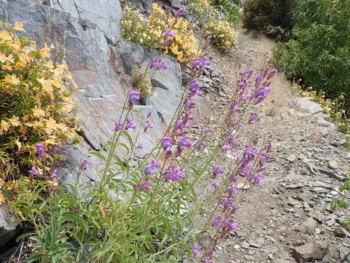
Grinnell’s Beardtongue: A Rare California Native Worth Protecting
If you’re passionate about growing native plants and supporting California’s unique biodiversity, Grinnell’s beardtongue (Penstemon grinnellii scrophularioides) might just capture your gardening heart. This perennial wildflower represents one of nature’s more specialized creations – a plant so adapted to its specific California home that it’s become quite rare in the wild.
What Makes Grinnell’s Beardtongue Special?
Grinnell’s beardtongue is a true California native, found exclusively within the Golden State’s diverse landscapes. As a member of the Penstemon family, it shares the characteristic tubular flowers that make beardtongues such pollinator magnets, but this particular variety has evolved its own unique characteristics that set it apart from its cousins.
This perennial forb – that’s botanist-speak for a soft-stemmed flowering plant that comes back year after year – grows as a herbaceous plant without the woody stems you’d find on shrubs or trees. Like other members of its family, it likely produces the signature trumpet-shaped blooms that give beardtongues their common name.
Where You’ll Find It Growing Wild
Grinnell’s beardtongue calls California home, and only California. This native plant has adapted specifically to the unique conditions found within the state’s boundaries, making it a true endemic species that you won’t encounter anywhere else in the world.
- Species observed
- No observations
A Plant That Needs Our Help
Here’s where things get serious for a moment. Grinnell’s beardtongue carries a conservation status of S3?T3?, which indicates some level of rarity and potential vulnerability. While the exact threat level remains somewhat undefined, this status suggests we should treat this plant with extra care and respect.
If you’re considering adding this beauty to your garden, please ensure you source it responsibly. This means:
- Purchase only from reputable native plant nurseries
- Verify that plants were propagated, not collected from wild populations
- Never dig plants from their natural habitat
- Consider this an opportunity to contribute to conservation efforts
Why Grow Grinnell’s Beardtongue?
Beyond the conservation angle, there are plenty of practical reasons to welcome this native into your landscape. As a California native, it’s naturally adapted to the state’s Mediterranean climate patterns, which likely means it can thrive with minimal water once established – a huge plus during our increasingly common drought periods.
Like other Penstemons, Grinnell’s beardtongue probably serves as a valuable pollinator plant, potentially attracting hummingbirds with its tubular flowers while also providing nectar for native bees and other beneficial insects. By growing this plant, you’re creating habitat and food sources for California’s native wildlife.
Growing Grinnell’s Beardtongue
While specific growing information for this particular variety is limited, we can draw from what we know about California native Penstemons in general. These plants typically appreciate:
- Well-draining soil – they don’t like wet feet
- Full sun to partial shade exposure
- Minimal summer water once established
- Good air circulation to prevent fungal issues
The key to success with most California natives is mimicking their natural growing conditions: think dry summers, occasional winter moisture, and excellent drainage year-round.
Perfect for the Right Garden
Grinnell’s beardtongue would likely thrive in native plant gardens, water-wise landscapes, and naturalistic plantings that celebrate California’s indigenous flora. It’s probably not the right choice for formal flower borders or high-water gardens, but it could be perfect for those seeking to create authentic habitat or support local ecosystems.
A Plant with Purpose
Growing Grinnell’s beardtongue isn’t just about adding another pretty flower to your garden – it’s about participating in conservation, supporting native ecosystems, and preserving a piece of California’s natural heritage. Every responsibly grown plant in cultivation helps reduce pressure on wild populations and keeps this unique species thriving for future generations.
If you’re ready to take on the rewarding challenge of growing this rare California native, start by connecting with local native plant societies or specialized nurseries who can guide you toward ethically sourced plants and provide region-specific growing advice.