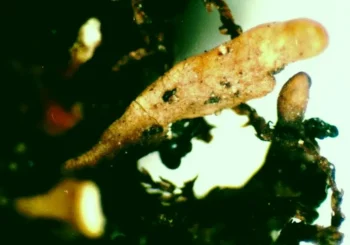
Gymnoderma Lichen: A Rare and Fascinating Garden Visitor You Can’t Plant
Have you ever noticed thin, grayish streaks growing on rocks in your garden or local hiking trails? You might be looking at one of nature’s most overlooked partnerships – a lichen! Today, we’re diving into the world of Gymnoderma lineare, commonly known as gymnoderma lichen, a remarkable organism that’s both more and less than it appears to be.
What Exactly Is Gymnoderma Lichen?
Here’s where things get wonderfully weird: gymnoderma lichen isn’t actually a plant at all! It’s a fascinating partnership between a fungus and an algae (and sometimes cyanobacteria too). Think of it as nature’s ultimate roommate situation – the fungus provides shelter and collects water and nutrients, while the algae makes food through photosynthesis. This botanical name Gymnoderma lineare might sound intimidating, but it’s simply describing this unique living collaboration.
You might also encounter this species referred to by its scientific synonym, Cladonia linearis A. Evans, in older field guides or research papers.
Where Does Gymnoderma Lichen Call Home?
Gymnoderma lineare is native to North America, with populations primarily found in the eastern regions, particularly throughout the Appalachian Mountains. However, this lichen has become increasingly rare across its range.
Why This Lichen Deserves Your Attention (And Protection)
Important Conservation Note: Gymnoderma lineare has an endangered status in the United States. This means it’s extremely rare and faces threats to its survival. If you’re lucky enough to spot this lichen in the wild, please observe and photograph it, but never collect or disturb it.
Spotting Gymnoderma Lichen in the Wild
Identifying gymnoderma lichen requires a keen eye, as it forms thin, linear (hence the name lineare) crusty growths on rock surfaces. Here’s what to look for:
- Thin, streak-like or linear growth patterns
- Greenish-gray to pale gray coloration
- Crusty or crustose texture that appears almost painted onto rock surfaces
- Preference for exposed rock faces and cliff areas
- Typically found in areas with clean air quality
Is Gymnoderma Lichen Beneficial in Gardens?
While you can’t plant or cultivate gymnoderma lichen (trust us, we’ll explain why), its presence in natural areas near your garden is actually a fantastic sign! Lichens are incredible environmental indicators – they’re like nature’s air quality monitors. If you spot any lichens growing naturally on rocks, old walls, or trees around your property, it means your local air quality is pretty good.
Lichens also play important ecological roles:
- They slowly break down rock surfaces, contributing to soil formation over time
- They provide habitat for tiny invertebrates and microorganisms
- They can indicate healthy ecosystem conditions
Why You Can’t Add This to Your Shopping List
Here’s the thing about lichens – they’re incredibly picky about their living conditions. Gymnoderma lineare requires:
- Specific rock types and mineral compositions
- Precise moisture and humidity levels
- Clean air free from pollutants
- The right balance of light and shade
- Years or even decades to establish
Unlike garden plants, lichens can’t be propagated, transplanted, or encouraged to grow in new locations. They’ll show up on their own if conditions are just right – and that’s part of their magic!
How to Support Lichen Diversity in Your Area
While you can’t plant gymnoderma lichen, you can create conditions that support lichen diversity in general:
- Maintain natural rock features and stone walls without cleaning or treating them
- Avoid using pesticides and chemical treatments near natural areas
- Support clean air initiatives in your community
- Leave dead tree branches and natural debris where safe to do so
- Create a native plant garden to support overall ecosystem health
The Takeaway: Appreciate, Don’t Appropriate
Gymnoderma lichen represents one of nature’s most enduring partnerships, quietly going about its business on rock faces across eastern North America. While we can’t invite it into our gardens directly, we can appreciate its ecological importance and work to protect the clean, healthy environments where it thrives.
The next time you’re out hiking or exploring natural areas, take a moment to look closely at the rocks around you. Those seemingly simple gray streaks might just be one of nature’s most sophisticated survival strategies – and if you’re incredibly lucky, you might spot the endangered gymnoderma lichen itself!
Remember: observe, appreciate, photograph if you’d like, but always leave these remarkable organisms exactly where you found them. Future generations of both lichens and lichen-lovers will thank you for it.