Hairy Balsamroot: A Golden Gem for Western Native Gardens
If you’re looking to add a splash of sunshine to your western garden while supporting local wildlife, hairy balsamroot (Balsamorhiza hookeri var. hirsuta) might just be your new favorite native perennial. This cheerful member of the sunflower family brings both beauty and ecological benefits to the right garden setting.
What Makes Hairy Balsamroot Special?
This native perennial is perfectly adapted to life in the American West, calling California, Nevada, Oregon, and Washington home. True to its common name, hairy balsamroot sports distinctively fuzzy, silvery-green foliage that gives it a soft, textured appearance even when not in bloom. The hairy characteristic isn’t just for show – those fine hairs help the plant conserve moisture in its naturally dry habitat.
- Species observed
- No observations
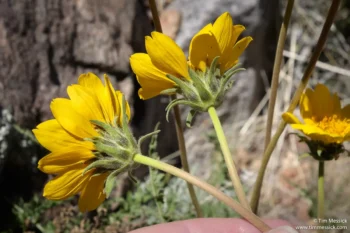
Come mid-spring, this modest-looking plant transforms into a showstopper, producing bright yellow, daisy-like flowers that can light up any garden space. At just over a foot tall when mature (about 1.1 feet), it’s perfectly sized for front-of-border plantings or naturalizing in larger drifts.
Why Choose Hairy Balsamroot for Your Garden?
There are several compelling reasons to consider this native beauty:
- Drought tolerance: Once established, this plant thrives with minimal supplemental water, making it perfect for water-wise gardening
- Low maintenance: With slow regrowth after blooming and minimal care requirements, it’s ideal for busy gardeners
- Pollinator magnet: Those spring blooms are irresistible to native bees, butterflies, and other beneficial insects
- Soil flexibility: Adapts to coarse, medium, and fine-textured soils, though drainage is key
- Native authenticity: Supporting local ecosystems by choosing plants that belong in your region
Perfect Garden Settings
Hairy balsamroot shines in several garden styles:
- Xeriscape gardens: Its drought tolerance makes it a natural choice for water-conservation landscaping
- Native plant gardens: Pairs beautifully with other western natives for authentic regional plantings
- Naturalized meadows: Creates stunning drifts when planted en masse
- Slope stabilization: The root system helps prevent erosion on banks and hillsides
- Wildlife gardens: Provides nectar for pollinators and seeds for birds
Growing Conditions and Care
Success with hairy balsamroot comes down to mimicking its natural habitat:
Climate: Hardy in USDA zones 5-9, this plant can handle temperatures as low as -18°F and needs at least 110 frost-free days per year.
Soil: Well-draining soil is absolutely essential. It tolerates a wide pH range (6.6-9.0) and doesn’t need rich, fertile conditions – in fact, it prefers lean soils with low fertility requirements.
Water: Annual precipitation between 9-20 inches is ideal. Once established, it has medium drought tolerance but avoid overwatering, which can lead to root problems.
Sun: Prefers full sun but can tolerate intermediate shade levels.
Planting and Propagation Tips
Growing hairy balsamroot from seed is your best bet, as it’s not commonly available through commercial nurseries. Here’s what you need to know:
- Seed starting: Seeds require cold stratification before planting – nature’s way of ensuring they sprout at the right time
- Timing: Plant seeds in fall or provide artificial stratification for spring planting
- Patience required: Seeds have a slow spread rate and medium seedling vigor, so don’t expect instant results
- Spacing: With 55,000 seeds per pound, a little goes a long way
- Long-term thinking: This moderate-lifespan perennial grows at a moderate rate, so think of it as a long-term garden investment
A Few Things to Consider
While hairy balsamroot has many wonderful qualities, it’s not the right choice for every garden:
- It doesn’t resprout after cutting, so avoid areas where regular mowing is needed
- The plant goes dormant after blooming, losing its foliage conspicuousness
- It has no vegetative spread, so you’ll need to plant multiple specimens for impact
- Not suitable for formal hedge applications
The Bottom Line
Hairy balsamroot is a fantastic choice for gardeners in its native range who want to create sustainable, wildlife-friendly landscapes with minimal input. Its cheerful spring blooms, drought tolerance, and ecological benefits make it a valuable addition to the right garden setting. Just remember that this is a plant for naturalistic rather than formal garden styles, and patience will be rewarded with years of golden spring displays that both you and local pollinators will love.
If you can source seeds responsibly and you’re gardening in the western states, hairy balsamroot deserves serious consideration for your native plant palette. It’s proof that sometimes the most beautiful gardens are those that work with nature rather than against it.