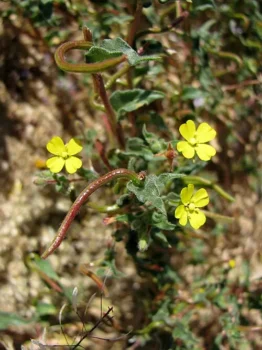
Hairy Suncup: A Charming Native Wildflower for Desert Gardens
Meet the hairy suncup (Camissonia pubens), a delightful little native wildflower that’s perfectly suited for gardeners looking to add authentic southwestern charm to their landscapes. This petite annual might not be the flashiest plant in your garden, but it brings a quiet beauty and important ecological value that makes it worth considering for the right setting.
What is Hairy Suncup?
Hairy suncup is a native annual forb belonging to the evening primrose family. True to its name, this low-growing plant is covered in soft hairs that give it a slightly fuzzy appearance. As an annual, it completes its entire life cycle in one growing season, making it a perfect choice for gardeners who enjoy the ever-changing nature of wildflower gardens.
You might also encounter this plant listed under several scientific synonyms, including Oenothera pubens and Oenothera contorta var. pubens, as botanical classifications have evolved over time.
Where Does Hairy Suncup Call Home?
This charming wildflower is native to the southwestern United States, specifically California and Nevada. In the wild, you’ll find it thriving in desert washes, sandy flats, and rocky slopes where many other plants struggle to survive.
- Species observed
- No observations
Why Grow Hairy Suncup in Your Garden?
There are several compelling reasons to consider adding hairy suncup to your native plant garden:
- Authentic native beauty: Support local ecosystems while enjoying genuine regional flora
- Pollinator magnet: The small yellow flowers attract native bees and other beneficial insects
- Low maintenance: Once established, this drought-tolerant plant requires minimal care
- Self-seeding: Annual plants often reseed themselves, creating naturalized colonies
- Desert garden perfect: Ideal for xeriscaping and water-wise landscaping
Garden Design and Landscape Role
Hairy suncup works beautifully as a ground-covering element in native plant gardens, desert landscapes, and wildflower meadows. Its low-growing habit makes it an excellent choice for:
- Rock gardens and desert scapes
- Native wildflower mixes
- Natural areas and restoration projects
- Water-wise landscape borders
The plant typically stays relatively small and spreads modestly, making it suitable for both large naturalized areas and smaller residential gardens.
Growing Conditions and Care
Hairy suncup is surprisingly easy to grow when you match its preferred conditions:
- Sunlight: Full sun exposure
- Soil: Well-draining sandy or rocky soil
- Water: Drought tolerant; minimal water once established
- Climate: Suitable for USDA hardiness zones 8-10
The key to success with hairy suncup is remembering that it evolved in desert conditions. Avoid overwatering and ensure excellent drainage to prevent root rot.
Planting and Propagation Tips
Since hairy suncup is an annual, it’s typically grown from seed:
- Direct sow seeds in fall for spring germination
- Lightly rake seeds into soil surface
- Provide occasional water during germination period
- Once established, reduce watering significantly
- Allow some plants to go to seed for natural reseeding
A Note About Conservation
Hairy suncup has a conservation status that suggests it may be somewhat vulnerable in parts of its range. If you’re interested in growing this species, be sure to source seeds or plants from reputable native plant nurseries that collect responsibly and don’t impact wild populations.
Special Features and Wildlife Benefits
Like many members of the evening primrose family, hairy suncup flowers often open in the evening, attracting night-flying pollinators as well as day-active bees. The small yellow blooms may seem modest, but they play an important role in supporting local pollinator communities.
Is Hairy Suncup Right for Your Garden?
Consider hairy suncup if you:
- Live in California or Nevada
- Want to create authentic native plant landscapes
- Prefer low-maintenance, drought-tolerant plants
- Enjoy subtle, naturalistic beauty over flashy blooms
- Want to support local pollinators and ecosystems
This little native wildflower might not win any showiness contests, but it offers the quiet satisfaction of growing something truly at home in your regional landscape. For gardeners committed to native plants and water-wise gardening, hairy suncup represents the kind of authentic, ecologically valuable species that makes a native garden truly special.