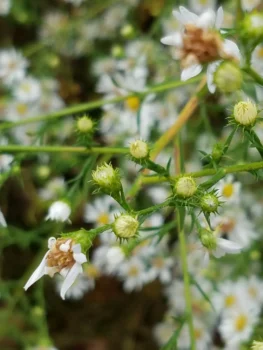
Hairy White Oldfield Aster: A Late-Season Pollinator Powerhouse
If you’ve ever wondered what those clouds of tiny white flowers are that seem to pop up everywhere in late summer and fall, you’ve probably spotted the hairy white oldfield aster (Symphyotrichum pilosum). This humble native wildflower might not win any beauty contests up close, but it’s absolutely essential for pollinators when most other flowers have called it quits for the season.
What Is Hairy White Oldfield Aster?
This perennial forb is a true North American native, naturally occurring across an impressively wide range from Canada down to the Gulf Coast states. You’ll find it growing wild in places like Alabama, Texas, Maine, and everywhere in between – including parts of British Columbia, New Brunswick, Nova Scotia, Ontario, and Quebec. It’s one of those plants that seems to have figured out how to thrive just about anywhere on the continent.
- Species observed
- No observations
As a forb, the hairy white oldfield aster lacks significant woody tissue, instead growing as a herbaceous perennial that dies back to the ground each winter and returns from its root system the following spring.
Why You Might Want to Plant It
Here’s where this unassuming plant really shines:
- Pollinator magnet: When autumn arrives and most flowers have faded, this aster becomes a crucial nectar source for butterflies, bees, and other pollinators preparing for winter
- Ultra-low maintenance: Once established, it’s incredibly drought tolerant and thrives in poor soils that would challenge other plants
- Native plant benefits: Supporting local ecosystems and wildlife that co-evolved with this species
- Adaptable growing conditions: Whether your site is wetland or upland, this flexible plant can usually make it work
- Late-season interest: Provides structure and color when many gardens are winding down
Why You Might Think Twice
Before you rush to plant it everywhere, consider these potential drawbacks:
- Aggressive spreader: This plant can take over if left unchecked, especially in favorable conditions
- Self-seeds readily: You might find seedlings popping up in unexpected places
- Not the showiest: Individual flowers are quite small, though they create impact through sheer numbers
Perfect Garden Situations
Hairy white oldfield aster works best in:
- Prairie and wildflower gardens where naturalistic spreading is welcome
- Pollinator gardens that need late-season bloomers
- Restoration projects on disturbed sites
- Large naturalized areas where it has room to roam
- Cottage gardens with a wild, informal feel
Growing Conditions and Care
This is where the hairy white oldfield aster really earns its keep – it’s remarkably unfussy:
- Sunlight: Full sun preferred, though it tolerates some shade
- Soil: Adaptable to various soil types, actually prefers lean, poor soils over rich garden soil
- Water: Drought tolerant once established, though it appreciates occasional watering during extreme dry spells
- Hardiness: Hardy in USDA zones 3-9
The plant’s wetland status varies by region – it can handle both wet and dry conditions, making it incredibly versatile for different garden situations.
Planting and Care Tips
Growing hairy white oldfield aster successfully is refreshingly simple:
- Timing: Plant seeds in fall or early spring; transplants can go in anytime during the growing season
- Spacing: Give plants room to spread – they’ll fill in gaps naturally
- Maintenance: Cut back stems in early spring before new growth emerges
- Division: Divide clumps every few years if you want to control spread or share with neighbors
- Deadheading: Not necessary unless you want to prevent self-seeding
The Bottom Line
Hairy white oldfield aster is the kind of plant that grows on you – literally and figuratively. While it might not be the star of your garden’s summer show, come autumn, you’ll appreciate having this reliable native providing crucial pollinator support when it’s needed most. Just be prepared to manage its enthusiasm for spreading, and you’ll have a valuable addition to any naturalistic planting scheme.
If you’re looking to support local wildlife and want a truly low-maintenance perennial that thrives on neglect, this native aster deserves serious consideration. Just maybe think twice before planting it right next to your prized hosta collection!