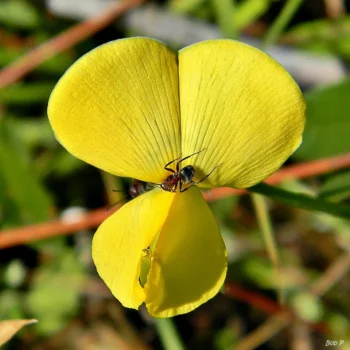
Hairypod Cowpea: A Native Vine Worth Discovering
If you’re looking to add more native plants to your garden repertoire, you might want to get acquainted with the hairypod cowpea (Vigna luteola). This perennial native might not be the most famous plant in the garden world, but it’s got some interesting qualities that make it worth considering for the right spot.
What Exactly Is Hairypod Cowpea?
Hairypod cowpea goes by a few names – you might also hear it called Dalrymple vigna. As a member of the legume family, this native plant is what botanists call a forb or herb, meaning it’s a non-woody perennial that dies back to the ground each year but returns from its roots.
Like other plants in the Vigna genus, hairypod cowpea is related to black-eyed peas and other cowpeas you might know from the vegetable garden, though this wild native cousin has adapted to different growing conditions over thousands of years.
Where Does It Call Home?
This native beauty has quite an impressive range across the southeastern United States and beyond. You’ll find hairypod cowpea naturally growing in Alabama, Florida, Georgia, Louisiana, Mississippi, North Carolina, Pennsylvania, South Carolina, Texas, and Virginia. It’s also native to Puerto Rico and the U.S. Virgin Islands, giving it both mainland and tropical credentials.
- Species observed
- No observations
The Wetland Connection
Here’s where things get interesting – hairypod cowpea has a special relationship with water. Depending on where you are, it shows different preferences:
- In most regions (Atlantic and Gulf Coastal Plain, Eastern Mountains and Piedmont, Great Plains, and Northcentral & Northeast), it’s considered facultative wetland, meaning it usually prefers wet spots but can handle drier conditions
- In the Caribbean and Hawaii, it’s more flexible, equally happy in wet or dry locations
This wetland preference makes it a potentially valuable plant for rain gardens, pond edges, or those challenging soggy spots in your yard where other plants struggle.
Why Grow Hairypod Cowpea?
While we don’t have all the details on this plant’s specific garden performance, there are several compelling reasons to consider it:
It’s a nitrogen-fixer: Like other legumes, hairypod cowpea likely forms partnerships with soil bacteria to pull nitrogen from the air and make it available to nearby plants. This makes it a natural soil improver.
Native plant benefits: As a true native, it’s adapted to local conditions and supports native ecosystems in ways that non-native plants simply can’t match.
Wetland restoration: If you’re working on a wetland restoration project or managing water-logged areas, this could be exactly what you need.
Growing Tips and Considerations
Since specific growing information for hairypod cowpea is limited, here’s what we can piece together based on its native habitats and plant family:
Water needs: Given its wetland status, plan to provide consistent moisture, especially during the growing season. It should handle periodic flooding better than most garden plants.
Location: This plant appears to prefer areas with at least some moisture retention. Think pond margins, rain garden depressions, or naturally wet spots in your landscape.
Climate: Its native range suggests it handles heat and humidity well, making it suitable for southern and southeastern gardens.
The Bottom Line
Hairypod cowpea might not be your typical garden center find, but it represents the kind of specialized native plant that can solve specific landscaping challenges while supporting local ecosystems. If you have wet areas where other plants struggle, or if you’re passionate about including lesser-known natives in your garden, this could be a plant worth tracking down.
Just remember that finding seeds or plants might take some detective work – try contacting native plant societies in your area or specialized native plant nurseries. Sometimes the most rewarding garden additions are the ones that take a little extra effort to find!