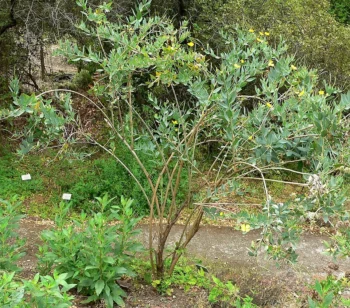
Harford’s Tree Poppy: A Rare Island Gem for Your California Garden
Meet Harford’s tree poppy (Dendromecon harfordii), one of California’s most enchanting yet elusive native shrubs. This stunning perennial brings a touch of island magic to mainland gardens with its cheerful yellow blooms and silvery foliage. But before you fall head-over-heels for this beauty, there’s something important you should know about its special status.
What Makes Harford’s Tree Poppy Special
Harford’s tree poppy is a true California native, but not just any California native – it’s an island endemic that naturally occurs only on the Channel Islands, specifically Santa Cruz and Santa Rosa Islands. This shrub typically grows 4-8 feet tall and wide, creating a rounded, multi-stemmed form that’s absolutely stunning when covered in its signature bright yellow, papery flowers.
The plant blooms from spring through summer, producing cheerful 2-3 inch flowers that look like they’re made of crepe paper. Between the blooming periods, the silvery-green foliage provides year-round interest and complements other Mediterranean plants beautifully.
Native Range and Distribution
This rare shrub is found naturally only in California, specifically on the Channel Islands off the coast of Southern California. Its limited natural range makes it a truly special addition to any garden.
- Species observed
- No observations
Important Rarity Considerations
Here’s where things get serious: Harford’s tree poppy has a Global Conservation Status of S3Q, meaning it’s considered rare and its populations are of conservation concern. This doesn’t mean you can’t grow it, but it does mean you need to be extra careful about where you source your plants.
If you’re considering adding this beauty to your garden, please only purchase from reputable nurseries that grow their plants from ethically sourced seed or cuttings. Never collect from wild populations – this could harm the species’ long-term survival.
Why Grow Harford’s Tree Poppy?
Despite its rarity concerns, there are compelling reasons to consider this plant for the right garden:
- Stunning yellow flowers that bloom for months
- Excellent drought tolerance once established
- Attracts beneficial pollinators like bees and butterflies
- Perfect for Mediterranean and California native plant gardens
- Low maintenance once properly established
- Unique silvery foliage adds textural interest
Ideal Growing Conditions
Harford’s tree poppy thrives in USDA hardiness zones 9-11, making it suitable for most of coastal and southern California, as well as other mild winter areas. Here’s what this island native needs to succeed:
- Sunlight: Full sun is essential for best flowering
- Soil: Well-draining soil is absolutely critical – this plant cannot tolerate wet feet
- Water: Drought tolerant once established, requiring minimal summer water
- Climate: Prefers Mediterranean climates with dry summers and mild winters
Perfect Garden Settings
This shrub shines in:
- Mediterranean-style gardens
- California native plant landscapes
- Drought-tolerant garden designs
- Coastal gardens
- Rock gardens with excellent drainage
Planting and Care Tips
Success with Harford’s tree poppy comes down to getting the basics right:
- Planting: Plant in fall or early spring when temperatures are mild
- Soil preparation: Amend heavy soils with coarse sand or gravel to improve drainage
- Watering: Water regularly the first year, then reduce to occasional deep watering
- Pruning: Light pruning after flowering helps maintain shape
- Fertilizing: Generally unnecessary in most soils
Pollinator and Wildlife Benefits
The bright yellow flowers of Harford’s tree poppy are magnets for pollinators, particularly bees and butterflies. The long blooming season provides consistent nectar sources throughout much of the growing season, making it a valuable addition to pollinator gardens.
Is This Plant Right for Your Garden?
Harford’s tree poppy is an excellent choice if you:
- Garden in zones 9-11 with Mediterranean climate
- Want a low-water, low-maintenance shrub
- Appreciate unique, rare plants (responsibly sourced)
- Have excellent drainage in your garden
- Want to support pollinators
However, skip this plant if you:
- Have heavy, poorly-draining soil that you can’t amend
- Garden in areas with high summer humidity
- Prefer plants that need regular water
- Can’t source the plant responsibly
The Bottom Line
Harford’s tree poppy is a genuinely special plant that can bring a piece of California’s Channel Islands to your garden. Its cheerful yellow blooms, drought tolerance, and pollinator appeal make it a wonderful choice for the right setting. Just remember to source your plant responsibly – this rare beauty deserves our protection both in the wild and in cultivation.
When grown with care and respect for its conservation status, Harford’s tree poppy can be a stunning centerpiece in Mediterranean and native plant gardens, reminding us daily of California’s incredible botanical heritage.