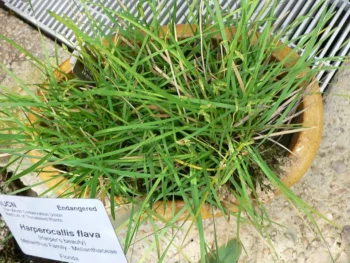
Harper’s Beauty: A Rare Florida Treasure That Belongs in the Wild
Meet Harper’s beauty (Harperocallis flava), one of Florida’s most endangered native plants and quite possibly one you should admire from afar rather than attempt to grow in your garden. This delicate perennial forb holds the distinction of being one of the rarest plants in North America, making it a fascinating botanical treasure with a sobering conservation story.
What Makes Harper’s Beauty Special?
Harper’s beauty is a small, unassuming plant that packs a big conservation punch. This herbaceous perennial produces delicate yellow flowers on slender stems, rising above grass-like foliage that blends seamlessly into its wetland habitat. Don’t let its modest appearance fool you – this little plant represents millions of years of evolution and holds a unique place in Florida’s botanical heritage.
Where Does Harper’s Beauty Call Home?
Here’s where things get really specific: Harper’s beauty is found only in a tiny corner of the Florida Panhandle. We’re talking about an extremely limited native range that makes this plant one of the most geographically restricted species in North America. This isn’t a plant you’ll stumble across on a casual nature walk – it exists in just a handful of locations.
- Species observed
- No observations
The Reality Check: Why You Shouldn’t Plant Harper’s Beauty
Before you start dreaming of adding this rare beauty to your garden, let’s have an honest conversation. Harper’s beauty carries an Endangered status federally and a Global Conservation Status of S1 (Critically Imperiled). Here’s what this means for home gardeners:
- There are likely fewer than 1,000 individuals remaining in the wild
- The plant exists in only 5 or fewer natural locations
- It’s extremely vulnerable to extinction
- Removing plants from wild populations could contribute to its decline
Even if you could source Harper’s beauty responsibly (which is highly unlikely), this plant has very specific growing requirements that make home cultivation nearly impossible.
Understanding Its Unique Needs
Harper’s beauty is what botanists call an obligate wetland species, meaning it almost always occurs in wetlands. This plant has evolved to thrive in:
- Consistently wet, acidic soils
- Specialized bog and wetland conditions
- Very specific water chemistry and soil composition
- Precise seasonal flooding patterns
These aren’t conditions most gardeners can replicate, even with the best intentions.
Better Alternatives for Your Florida Garden
Instead of attempting to grow Harper’s beauty, consider these native Florida alternatives that can bring similar charm to your landscape while supporting conservation:
- Blue-eyed grass (Sisyrinchium) – Grass-like foliage with delicate flowers
- Spider lily (Hymenocallis) – Striking white flowers, wetland-friendly
- Southern blue flag iris (Iris virginica) – Beautiful purple-blue flowers, loves wet feet
- Swamp lily (Crinum americanum) – Fragrant white flowers, native wetland plant
How You Can Help Harper’s Beauty
While you can’t grow Harper’s beauty in your garden, you can still support its conservation:
- Support wetland conservation organizations in Florida
- Visit botanical gardens that may have conservation programs
- Choose native plants for your own garden to support broader ecosystem health
- Learn about and protect local wetlands in your area
The Bigger Picture
Harper’s beauty serves as a powerful reminder that not every plant belongs in our gardens – and that’s okay! Some species are so specialized and rare that their greatest service is remaining in their natural habitat, contributing to the complex web of relationships that make ecosystems function.
By choosing abundant native alternatives and supporting conservation efforts, we can create beautiful, functional landscapes while leaving rare treasures like Harper’s beauty to thrive where they belong – in the wild, protected and preserved for future generations to wonder at and study.
Sometimes the most beautiful thing we can do for a plant is simply let it be.