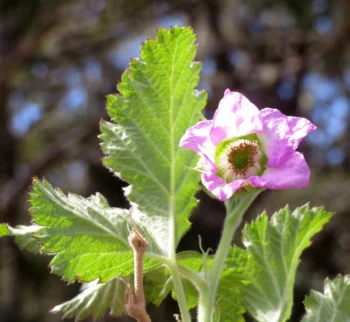
Hawai’i Blackberry: A Sweet Native Treasure for Your Hawaiian Garden
If you’re looking to add a touch of authentic Hawaiian flavor to your garden—literally—meet the Hawai’i blackberry, or `akala as it’s known in Hawaiian. This delightful native shrub (Rubus hawaiensis) offers gardeners in the islands a chance to grow something truly special: a plant that’s been part of Hawaii’s natural landscape for centuries and produces tasty berries to boot!
What Makes Hawai’i Blackberry Special
The Hawai’i blackberry is a perennial shrub that stays refreshingly compact, typically growing under 1.5 feet tall and never exceeding 3 feet at maturity. This low-growing habit makes it perfect for gardeners who want the beauty and benefits of native plants without worrying about something taking over their entire yard.
This charming plant is endemic to Hawaii, meaning you won’t find it growing wild anywhere else on Earth. It naturally occurs throughout the Hawaiian Islands and has adapted beautifully to the unique growing conditions found there.
- Species observed
- No observations
A Plant Worth Protecting
Here’s something important to know: Hawai’i blackberry has a conservation status of S2S3, which indicates it’s somewhat rare and vulnerable. This doesn’t mean you can’t grow it—in fact, cultivating native plants like this can help support conservation efforts—but it does mean you should source your plants responsibly from reputable native plant nurseries or conservation organizations.
Why Your Garden (and Local Wildlife) Will Love It
The Hawai’i blackberry isn’t just a pretty face. Its white to pale pink flowers are a magnet for native Hawaiian pollinators, including native bees. Plus, those flowers eventually become edible berries that ripen to red or dark purple—a sweet reward for your gardening efforts!
The plant’s low, spreading growth habit makes it excellent for:
- Ground cover in native Hawaiian gardens
- Erosion control on slopes
- Restoration projects
- Edible landscaping
- Rain gardens and naturalized areas
Growing Conditions That Make It Happy
One of the best things about Hawai’i blackberry is that it’s quite adaptable to different growing conditions, which makes sense given its native status. Here’s what it prefers:
- Light: Partial shade to full sun
- Soil: Moist, well-draining soils (it’s quite tolerant of Hawaii’s volcanic soils)
- Climate: USDA hardiness zones 9-11 (perfect for Hawaii’s tropical and subtropical climates)
- Water: As a facultative wetland plant, it can handle both moist and drier conditions
Planting and Care Made Simple
The beauty of growing native plants is that they’re typically low-maintenance once established, and Hawai’i blackberry is no exception. Here are some tips for success:
- Plant in spring or fall when temperatures are milder
- Water regularly during the first few months to help establish roots
- Once established, provide occasional watering during particularly dry periods
- The plant can spread via runners, so give it room to naturalize or prune to contain it
- Very little fertilization needed—native plants are adapted to local soil conditions
Is This Plant Right for Your Garden?
Hawai’i blackberry is an excellent choice if you:
- Live in Hawaii (zones 9-11)
- Want to support native ecosystems and pollinators
- Enjoy edible landscaping
- Need a low-growing ground cover
- Are involved in restoration projects
- Appreciate plants with cultural and historical significance
However, remember that due to its conservation status, you should only obtain plants from responsible sources. Contact local native plant societies, botanical gardens, or conservation organizations for guidance on where to find ethically sourced Hawai’i blackberry plants.
A Sweet Addition to Island Life
Growing Hawai’i blackberry is more than just adding another plant to your garden—it’s about connecting with Hawaii’s natural heritage while supporting conservation efforts. Plus, there’s something pretty magical about picking berries from a plant that’s been thriving in these islands long before any of us arrived. Your taste buds, local pollinators, and Hawaii’s ecosystem will all thank you for choosing this sweet native treasure.