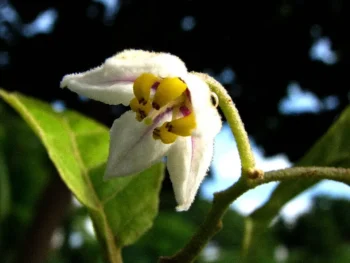
Hawai’i Horsenettle: A Rare Hawaiian Native Worth Protecting
Meet the Hawai’i horsenettle (Solanum sandwicense), one of the islands’ most endangered native shrubs. This critically imperiled member of the nightshade family represents both the unique beauty of Hawaiian flora and the urgent need for conservation in our gardens.
What Makes Hawai’i Horsenettle Special?
This perennial shrub is a true Hawaiian endemic, meaning it exists nowhere else on Earth. Growing as a multi-stemmed woody plant typically reaching 4-5 meters (13-16 feet) in height, Hawai’i horsenettle showcases the distinctive characteristics that make Hawaiian native plants so remarkable. You might also see it referenced by its botanical synonyms, Solanum hillebrandii or Solanum kavaiense, in older botanical literature.
Where Does It Naturally Grow?
Hawai’i horsenettle is found exclusively in the Hawaiian Islands, where it has adapted to the unique volcanic landscapes and tropical climate conditions that define the archipelago.
- Species observed
- No observations
A Conservation Priority
Important Conservation Note: Hawai’i horsenettle carries a Global Conservation Status of S1, meaning it’s critically imperiled with typically fewer than 5 occurrences or very few remaining individuals (less than 1,000). It’s also listed as Endangered in the United States. This makes it one of Hawaii’s most at-risk native plants.
Should You Plant Hawai’i Horsenettle?
If you’re passionate about Hawaiian native plant conservation and have access to responsibly sourced material, growing Hawai’i horsenettle can be a meaningful contribution to preservation efforts. However, this isn’t a plant for casual gardeners – it requires specific conditions and should only be grown with plants obtained through legitimate conservation programs or botanical institutions.
Growing Conditions and Care
As a Hawaiian native, this shrub thrives in tropical conditions equivalent to USDA hardiness zones 10-12. It naturally grows in Hawaii’s unique volcanic environments, suggesting it prefers:
- Well-draining, volcanic-type soils
- Partial shade to full sun exposure
- Tropical temperatures year-round
- Natural rainfall patterns similar to its native habitat
Garden Role and Landscape Use
Due to its endangered status, Hawai’i horsenettle is primarily suited for:
- Native Hawaiian restoration projects
- Botanical gardens and educational institutions
- Specialized conservation collections
- Research and propagation facilities
This isn’t a plant for typical landscape use, but rather a species that requires dedicated conservation-minded gardening.
Supporting Conservation
Rather than attempting to grow this rare species without proper resources, consider supporting Hawaiian native plant conservation through:
- Donating to native plant societies and botanical gardens in Hawaii
- Volunteering with habitat restoration projects
- Growing other native Hawaiian plants that are less endangered
- Advocating for native habitat protection
The Bottom Line
Hawai’i horsenettle represents the irreplaceable botanical heritage of the Hawaiian Islands. While most gardeners won’t have the opportunity to grow this critically endangered shrub, understanding its plight helps us appreciate the importance of protecting Hawaii’s unique ecosystems. If you’re in Hawaii and interested in native gardening, connect with local botanical institutions to learn about conservation efforts and discover other native species you can responsibly incorporate into your landscape.
Every native plant we lose diminishes the natural world’s diversity, making species like Hawai’i horsenettle precious reminders of what we’re working to preserve for future generations.