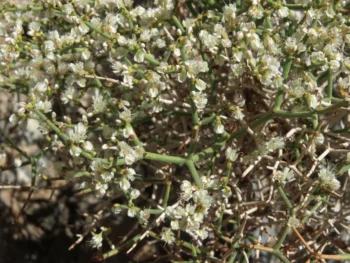
Heermann’s Buckwheat: A Desert Gem Worth Growing Responsibly
If you’re looking to add a touch of desert elegance to your garden while supporting native ecosystems, Heermann’s buckwheat (Eriogonum heermannii var. argense) might just be the perfect plant for you. This charming native shrub brings year-round interest to drought-tolerant landscapes, though it comes with an important caveat every responsible gardener should know about.
What Makes Heermann’s Buckwheat Special?
Heermann’s buckwheat is a perennial shrub that typically grows as a multi-stemmed woody plant, usually staying under 13-16 feet in height. What really catches the eye are its delicate clusters of small white to pinkish flowers that bloom against attractive gray-green foliage. The plant maintains its compact, rounded form naturally, making it a low-maintenance addition to the right garden setting.
Where Does It Call Home?
This native beauty is naturally found across the Mojave Desert region, growing wild in Arizona, California, and Nevada. It’s perfectly adapted to the harsh desert conditions of these areas, which gives you a clue about what it needs to thrive in your garden.
- Species observed
- No observations
A Word of Caution: Rarity Matters
Before you rush out to find this plant, here’s something important to know: Heermann’s buckwheat has a Global Conservation Status of S5T3, indicating it faces some conservation concerns. While we absolutely encourage planting native species like this one, it’s crucial that you source your plants responsibly. Always purchase from reputable native plant nurseries that propagate their plants ethically rather than collecting from wild populations.
Perfect Garden Roles
Heermann’s buckwheat shines in several garden settings:
- Xeriscape and drought-tolerant landscapes
- Desert-themed gardens
- Rock gardens where its compact form fits perfectly
- Native plant gardens focused on supporting local ecosystems
- As a specimen plant where its unique form can be appreciated
Pollinator Paradise
One of the best reasons to grow Heermann’s buckwheat is its value to pollinators. The clusters of small flowers are magnets for bees, butterflies, and other native pollinators. By planting this native species, you’re providing crucial habitat and food sources that these creatures have evolved alongside for thousands of years.
Growing Conditions: Keep It Simple
The beauty of native plants is that they’re already perfectly adapted to their environment. Heermann’s buckwheat thrives in:
- Full sun exposure
- Well-draining sandy or rocky soils
- Minimal water once established
- USDA hardiness zones 8-10
The key word here is drainage. Like most desert natives, this plant absolutely cannot tolerate soggy soil conditions.
Planting and Care Tips
Getting your Heermann’s buckwheat established is straightforward if you follow these guidelines:
- Plant in fall or early spring when temperatures are moderate
- Ensure excellent drainage by amending heavy soils with sand or gravel
- Water regularly during the first growing season to establish roots
- Once established, provide minimal supplemental watering
- Avoid fertilizers, which can actually harm desert natives
- Prune lightly if needed to maintain shape, but generally let the plant grow naturally
Is This Plant Right for Your Garden?
Heermann’s buckwheat is perfect for gardeners in appropriate climate zones who want to create water-wise landscapes while supporting native wildlife. It’s especially suited for those interested in desert gardening or anyone looking to reduce their landscape’s water requirements.
However, this plant isn’t suitable for humid climates, areas with heavy clay soils, or gardens where regular irrigation is the norm. It also requires full sun, so shady locations won’t work.
Remember, when you choose to grow this beautiful native, you’re not just adding an attractive plant to your garden – you’re participating in conservation efforts and supporting the complex web of life that depends on native plant communities. Just make sure you’re sourcing your plants responsibly from reputable nurseries that specialize in native species propagation.