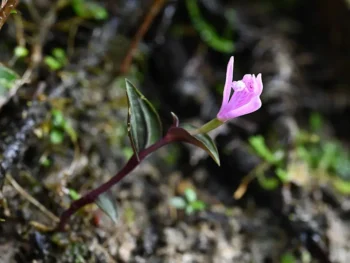
Hernando County Noddingcaps: A Rare Native Orchid Worth Knowing About
Meet Hernando County noddingcaps (Triphora surinamensis), one of those mysterious native plants that most gardeners have never heard of—and for good reason! This perennial orchid is about as elusive as they come, representing the kind of botanical treasure that makes native plant enthusiasts’ hearts skip a beat.
What Exactly Are Hernando County Noddingcaps?
Don’t let the fancy name fool you—Hernando County noddingcaps are actually tiny terrestrial orchids that belong to a group of plants known for being, well, rather secretive. As a forb (basically a non-woody flowering plant), this perennial lacks the significant woody tissue you’d find in shrubs or trees. Instead, it keeps its growing points at or below ground level, which helps it survive through tough times.
The noddingcaps part of the name gives you a hint about what to expect: these orchids typically produce small, nodding flowers that seem to bow their heads modestly—quite fitting for such a humble little plant!
Where Does This Rare Beauty Call Home?
Triphora surinamensis is native to Puerto Rico, where it grows as part of the island’s unique flora. Currently, this species is documented only in Puerto Rico, making it a true regional treasure.
- Species observed
- No observations
The Growing Reality: Why You Probably Won’t Find This in Nurseries
Here’s where things get interesting (and a bit challenging). Hernando County noddingcaps fall into that category of plants that are incredibly difficult to cultivate, and information about growing them successfully is practically non-existent. Here’s what we do know:
- It’s a perennial that can survive in both wetland and non-wetland conditions (what botanists call facultative)
- Like most terrestrial orchids, it likely depends on specific soil fungi for survival
- Its rarity suggests it has very particular habitat requirements
- Propagation methods are unknown, which makes cultivation extremely challenging
Should You Try to Grow Hernando County Noddingcaps?
The short answer? Probably not—at least not without doing some serious homework first. Here’s why:
This orchid represents one of those plants that’s better appreciated in its natural habitat than in home gardens. The lack of available cultivation information, combined with its apparent rarity, suggests that attempting to grow it could be both frustrating for you and potentially harmful to wild populations if plants were collected inappropriately.
What This Means for Native Plant Enthusiasts
While you might not be able to grow Hernando County noddingcaps in your backyard, their existence reminds us of the incredible diversity of native plants that call our regions home. These rare species play important roles in their ecosystems, even if we don’t fully understand what those roles are yet.
If you’re passionate about supporting native orchids, consider focusing on more readily available native species that can thrive in cultivation, or support conservation organizations working to protect rare plant habitats in Puerto Rico and other tropical regions.
The Bottom Line
Hernando County noddingcaps serve as a wonderful reminder that our native flora includes some truly special species—even if we can’t grow them all in our gardens. Sometimes the best way to appreciate a rare native plant is to learn about it, respect its habitat needs, and support the conservation efforts that keep these botanical treasures around for future generations to discover and admire.
For those interested in native orchids that are more garden-friendly, consider exploring other native species that have established cultivation guidelines and are available through reputable native plant sources.