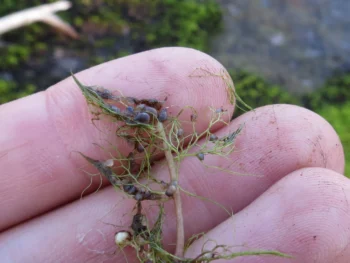
Hiddenfruit Bladderwort: A Tiny Carnivorous Native Worth Knowing
Meet the hiddenfruit bladderwort (Utricularia geminiscapa), one of North America’s most fascinating yet overlooked native plants. This diminutive carnivorous plant might not win any beauty contests, but it’s a remarkable example of nature’s ingenuity and a worthy addition to specialized water gardens.
What Makes Hiddenfruit Bladderwort Special?
Don’t let the name fool you – this isn’t your typical garden flower. Hiddenfruit bladderwort is a carnivorous forb, meaning it’s an herbaceous plant that actually catches and digests tiny prey. As a native species, it plays an important ecological role in wetland ecosystems across eastern North America.
This annual to perennial plant belongs to a group of fascinating carnivorous plants that have evolved specialized traps to supplement their nutrition in nutrient-poor environments. While you won’t see it chomping on flies like a Venus flytrap, it’s quietly working underwater to capture microscopic organisms.
Where Does It Call Home?
Hiddenfruit bladderwort has an impressive native range spanning much of eastern North America. You’ll find it naturally occurring from southeastern Canada down through the eastern United States. Its distribution includes New Brunswick, Nova Scotia, Ontario, Prince Edward Island, Quebec, and Newfoundland in Canada, plus numerous states from Maine to North Carolina and west to Wisconsin and Iowa.
- Species observed
- No observations
Growing Conditions: Not for Every Garden
Here’s where things get interesting – and challenging. Hiddenfruit bladderwort is classified as an obligate wetland plant across all regions where it grows. This means it almost always occurs in wetlands and has very specific requirements:
- Consistently wet, acidic conditions
- Nutrient-poor environments (bog-like conditions)
- Full sun to partial shade
- USDA hardiness zones 3-8
- Shallow water or saturated soil
Should You Grow Hiddenfruit Bladderwort?
The honest answer? Probably not – unless you’re a serious bog garden enthusiast or carnivorous plant collector.
This native plant is incredibly specialized and challenging to grow in typical garden settings. It requires the specific conditions found in natural wetlands, making it unsuitable for most residential landscapes. However, if you have or are planning a bog garden, water feature, or specialized wetland habitat, it could be a fascinating addition.
The Aesthetic Reality
Let’s be frank about appearances: hiddenfruit bladderwort isn’t going to wow your neighbors with showy blooms. It produces tiny yellow flowers on slender stems, and much of the plant’s activity happens underwater or at soil level where you can’t see it. The real appeal lies in its ecological significance and the marvel of its carnivorous lifestyle.
Planting and Care Tips (For the Brave)
If you’re determined to try growing this native wetland specialist, here’s what you need to know:
- Create acidic, nutrient-poor conditions similar to a natural bog
- Ensure constant moisture – the soil should never dry out
- Use rainwater or distilled water rather than tap water
- Provide bright light but protect from intense afternoon sun
- Don’t fertilize – these plants have evolved to thrive in low-nutrient environments
- Be patient – growth is typically slow
Wildlife and Ecological Benefits
While we may not have extensive data on specific wildlife benefits, carnivorous wetland plants like hiddenfruit bladderwort play important roles in their native ecosystems. They help maintain the delicate balance of wetland food webs and contribute to the overall biodiversity of these critical habitats.
The Bottom Line
Hiddenfruit bladderwort is a fascinating native plant that deserves our respect and protection in its natural habitats. However, for most gardeners, appreciating it in the wild or in specialized botanical collections is probably the best approach. If you’re passionate about wetland restoration or have the expertise and facilities for bog gardening, this little carnivore could be a unique addition to your collection.
For gardeners wanting to support native wildlife with easier-to-grow options, consider other native wetland plants like cardinal flower, blue flag iris, or native sedges that can thrive in more manageable garden conditions while still providing ecological benefits.