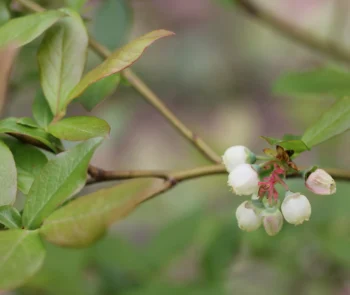
Highbush Blueberry: The Perfect Native Shrub for Beauty and Bounty
If you’re looking for a native plant that delivers year-round interest plus a delicious harvest, look no further than the highbush blueberry (Vaccinium corymbosum). This remarkable North American native combines stunning seasonal beauty with practical benefits, making it a must-have addition to any thoughtful landscape.
What Makes Highbush Blueberry Special?
The highbush blueberry is a true four-season performer. In spring, clusters of delicate white bell-shaped flowers dance along the branches, followed by the summer’s sweet blue berries that gardeners and wildlife alike eagerly anticipate. Come fall, the foliage transforms into a spectacular display of orange and red hues that rivals any ornamental shrub.
This perennial shrub typically reaches 8-12 feet tall and wide at maturity, growing at a moderate pace that won’t overwhelm your landscape. Its multi-stemmed growth habit creates an attractive, naturally rounded form that works beautifully as a specimen plant or grouped for impact.
Native Status and Geographic Distribution
As a true North American native, highbush blueberry naturally occurs across an impressive range spanning from eastern Canada down through the eastern United States. You’ll find this adaptable shrub thriving in states from Maine to Florida and west to the Great Lakes region, including Alabama, Arkansas, Connecticut, Delaware, Florida, Georgia, Illinois, Indiana, Kentucky, Louisiana, Maine, Maryland, Massachusetts, Michigan, Mississippi, New Hampshire, New Jersey, New York, North Carolina, Ohio, Oklahoma, Pennsylvania, Rhode Island, South Carolina, Tennessee, Texas, Vermont, Virginia, West Virginia, and Wisconsin, plus several Canadian provinces.
- Species observed
- No observations
Perfect Garden Roles and Landscape Uses
Highbush blueberry shines in multiple landscape roles:
- Edible landscaping: Combine beauty with bounty in mixed borders
- Rain gardens: Its facultative wetland status makes it ideal for areas with variable moisture
- Woodland edges: Naturally fits into partially shaded native plantings
- Foundation plantings: Provides structure and seasonal interest near the home
- Wildlife gardens: Supports native pollinators and provides food for birds
Growing Conditions and Care
Success with highbush blueberry comes down to understanding its preferences:
Soil Requirements: This shrub demands acidic soil with a pH between 4.7 and 7.5, though it performs best on the more acidic end of that range. It adapts well to various soil textures, from sandy to clay, as long as drainage is adequate.
Light and Moisture: While shade-tolerant, highbush blueberry produces the best fruit and fall color in full sun to partial shade. It prefers consistently moist (but not waterlogged) conditions and has low drought tolerance once established.
Climate Needs: Hardy in USDA zones 3-7, this tough shrub can handle winter temperatures down to -33°F and needs at least 100 frost-free days to produce fruit successfully.
Planting and Establishment Tips
Plant highbush blueberry in spring after the last frost date. Space plants 6-8 feet apart if you’re creating a hedge, or give specimen plants room to reach their full 8-12 foot spread. Here are key establishment tips:
- Dig a hole twice as wide as the root ball but no deeper
- Amend heavy clay soils with organic matter for better drainage
- Apply a 3-4 inch layer of acidic mulch (like pine needles or shredded oak leaves)
- Water deeply and regularly during the first growing season
- Plant multiple varieties for cross-pollination and better fruit production
Pollinator and Wildlife Benefits
Highbush blueberry flowers in early summer, providing crucial nectar for native bees, particularly bumblebees and solitary bee species. The berries that follow support over 98 species of birds, making this shrub a true wildlife magnet. Its dense summer foliage also provides nesting sites for songbirds.
Maintenance and Long-term Care
This low-maintenance shrub requires minimal fussing once established. Prune lightly in late winter to remove dead or damaged wood and maintain shape. The plant has good resprout ability, so don’t worry if you need to cut it back hard for renovation.
Highbush blueberry has high fire tolerance and medium drought tolerance once mature, though consistent moisture will reward you with better fruit production and growth.
Why Choose Highbush Blueberry?
In a world full of non-native landscape plants, highbush blueberry stands out as a native gem that truly earns its space. It supports local ecosystems, provides food for your family, delivers stunning seasonal beauty, and requires minimal maintenance once established. Whether you’re creating an edible landscape, supporting pollinators, or simply want a beautiful native shrub with multiple benefits, highbush blueberry delivers on all fronts.
This remarkable native proves that sometimes the best garden plants are the ones that have been growing in our neighborhoods for thousands of years – we just need to invite them back into our landscapes.