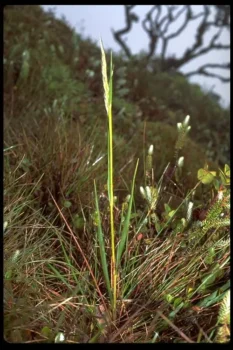
Hillegrand’s Reedgrass: A Critically Endangered Hawaiian Native Worth Protecting
If you’re passionate about Hawaiian native plants and conservation gardening, you’ve probably heard whispers about Hillegrand’s reedgrass (Calamagrostis hillebrandii). This endemic Hawaiian grass might not be the showiest plant in your garden, but it carries incredible ecological significance and a story of survival that makes it truly special.
What Makes Hillegrand’s Reedgrass Special?
Hillegrand’s reedgrass is a perennial grass that’s found nowhere else on Earth except the Hawaiian Islands. As a graminoid, it belongs to that wonderful family of grasses and grass-like plants that form the backbone of many ecosystems. This fine-textured beauty grows in graceful clumps and has adapted perfectly to Hawaii’s unique volcanic landscapes.
Where Does It Call Home?
This remarkable grass is endemic to Hawaii, meaning it evolved here and exists naturally nowhere else in the world. You’ll find it growing on volcanic slopes and in wet forest areas throughout the Hawaiian Islands, where it has carved out its own special niche over thousands of years.
- Species observed
- No observations
A Plant in Crisis: Understanding Its Rarity
Important Conservation Alert: Hillegrand’s reedgrass is critically endangered with a Global Conservation Status of S1, meaning it’s extremely rare with typically 5 or fewer occurrences remaining. In the United States, it’s classified as Endangered. This makes it one of Hawaii’s most imperiled native plants.
If you’re considering adding this grass to your garden, please only use responsibly sourced material from legitimate native plant nurseries or conservation programs. Never collect from wild populations!
Why Grow Hillegrand’s Reedgrass?
Despite its endangered status (or perhaps because of it), there are compelling reasons to include this grass in your Hawaiian native garden:
- Conservation impact: Every garden specimen helps preserve genetic diversity
- Erosion control: Its root system helps stabilize soil on slopes
- Authentic Hawaiian character: Adds genuine endemic appeal to native landscapes
- Low maintenance: Once established, it’s well-adapted to local conditions
- Wildlife habitat: Provides cover and nesting material for native birds
Growing Conditions and Care
Hillegrand’s reedgrass has specific needs that reflect its natural habitat:
- Moisture: Prefers consistently moist to wet soils (Facultative Wetland status)
- Light: Adapts to partial shade through full sun
- Soil: Thrives in organic-rich, well-draining volcanic soils
- Climate: Best suited for USDA zones 10-11 (Hawaii’s climate)
- Elevation: Can tolerate higher elevation conditions
Perfect Garden Settings
This versatile grass works beautifully in several landscape applications:
- Native Hawaiian restoration gardens
- Wetland or bog gardens
- Erosion control plantings on slopes
- Naturalistic meadow-style plantings
- Conservation-focused landscapes
Planting and Care Tips
Successfully growing Hillegrand’s reedgrass requires attention to its natural preferences:
- Plant in spring when rainfall is consistent
- Amend soil with organic matter to improve moisture retention
- Provide regular watering, especially during dry periods
- Mulch around plants to conserve moisture
- Avoid fertilizers – native plants prefer lean soils
- Allow natural dormancy cycles without interference
A Grass with Purpose
While Hillegrand’s reedgrass may not offer the flashy flowers that attract pollinators (it’s wind-pollinated like most grasses), its value lies in ecosystem function and conservation. This humble grass plays a crucial role in Hawaii’s native plant communities and represents thousands of years of evolution.
The Bottom Line
Hillegrand’s reedgrass isn’t for every gardener, but for those committed to Hawaiian native plant conservation, it offers a unique opportunity to participate in preserving one of the islands’ rarest species. Its critically endangered status means that every responsibly grown plant contributes to its survival.
If you have the right growing conditions – consistent moisture, Hawaiian climate, and a commitment to conservation – this endemic grass can be a meaningful addition to your native landscape. Just remember: always source plants responsibly and never collect from wild populations. Together, we can help ensure that future generations will still be able to appreciate this remarkable piece of Hawaiian natural heritage.