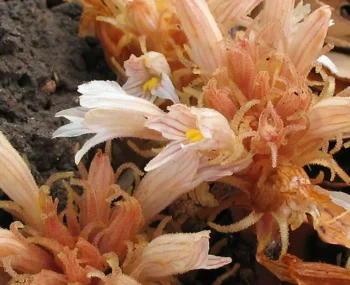
Hillside Broomrape: California’s Mysterious Parasitic Wildflower
Have you ever stumbled across a peculiar, leafless plant that seems to emerge from nowhere in California’s wild landscapes? You might have encountered the hillside broomrape (Orobanche vallicola), one of nature’s most unusual and increasingly rare wildflowers. This fascinating parasitic plant offers a glimpse into the complex relationships that exist in California’s native ecosystems.
What Makes Hillside Broomrape Special?
Hillside broomrape is an annual forb that belongs to the broomrape family—a group of plants that have evolved to live entirely off other plants. Unlike typical garden flowers that photosynthesize and create their own food, this species is a parasite that taps into the root systems of host plants to survive. It’s also known by the botanical synonym Orobanche californica var. claremontensis, though the accepted name remains Orobanche vallicola.
What’s truly remarkable about this plant is its ghost-like appearance. Without chlorophyll, it displays pale, almost translucent stems topped with small tubular flowers that range from cream to light purple. The entire plant emerges from underground, where it has been quietly attached to its host’s roots.
Where You’ll Find This Rare Beauty
Hillside broomrape is native exclusively to California, making it a true Golden State endemic. This specialized plant has adapted to specific microclimates and host relationships found only within the state’s diverse landscapes.
- Species observed
- No observations
A Plant in Need of Protection
Here’s where things get serious: hillside broomrape has a global conservation status of S2S3, meaning it’s considered imperiled to vulnerable. This rarity makes it a species of conservation concern, and populations are declining due to habitat loss and ecosystem disruption.
The plant’s parasitic lifestyle makes it particularly vulnerable because it depends not only on suitable habitat for itself but also on the presence of its specific host plants. When host species disappear or become stressed, the broomrape disappears too.
Why You Can’t (and Shouldn’t) Grow It in Your Garden
If you’re thinking about adding hillside broomrape to your native plant garden, here’s the reality check: it’s virtually impossible to cultivate. This isn’t a plant you can simply sow in your backyard. Here’s why:
- It requires specific host plants to survive—without them, it cannot germinate or grow
- The complex underground relationships it forms take years to establish in nature
- Its seeds need very specific conditions to germinate
- As a rare species, collecting it from the wild would be both illegal and harmful to wild populations
Even if cultivation were possible, responsible gardeners should avoid attempting to grow this rare species unless participating in legitimate conservation efforts with proper permits and professionally sourced materials.
Ecological Role and Benefits
While you can’t grow hillside broomrape in your garden, it plays an important role in California’s ecosystems. The small flowers do provide nectar for various insects, though specific pollinator relationships aren’t well documented. More importantly, parasitic plants like broomrapes can actually help maintain plant diversity in their native communities by preventing any single host species from becoming too dominant.
Supporting California’s Native Plant Heritage
Instead of trying to grow hillside broomrape, you can support California’s native plant diversity by:
- Choosing other California native wildflowers for your garden
- Supporting habitat conservation organizations
- Learning about and protecting wild spaces where rare species like this one still survive
- Participating in citizen science projects that help monitor rare plant populations
Plants like hillside broomrape remind us that some of nature’s most fascinating species aren’t meant for our gardens—they’re meant to inspire us to protect the wild spaces where they belong. By understanding and appreciating these ecological relationships, we become better stewards of California’s incredible botanical heritage.