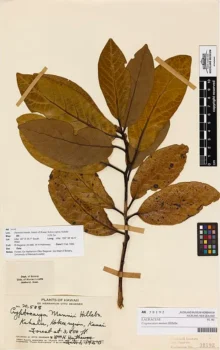
Holio: Hawaii’s Rare and Remarkable Native Tree
If you’re passionate about Hawaiian native plants and have the space for a magnificent shade tree, let me introduce you to holio (Cryptocarya mannii) – one of Hawaii’s most endangered native trees that deserves a special place in conservation-minded gardens.
What Makes Holio Special
Holio is a stunning evergreen tree that’s as rare as it is beautiful. This Hawaiian endemic belongs to the laurel family and can grow into an impressive specimen reaching 50+ feet in height under ideal conditions. With its glossy, dark green leaves and smooth bark, holio creates a lush, tropical canopy that provides excellent shade and adds an authentic Hawaiian feel to any landscape.
A True Hawaiian Native
Cryptocarya mannii is endemic to the Hawaiian Islands, meaning it exists nowhere else on Earth. This remarkable tree once thrived in Hawaii’s mesic and wet forests, but habitat loss has made it increasingly rare in the wild.
- Species observed
- No observations
Conservation Alert: Handle with Care
Here’s something crucial every gardener needs to know: holio has a Global Conservation Status of S2, which means it’s imperiled. With only an estimated 6-20 occurrences remaining and fewer than 1,000-3,000 individuals in the wild, this tree is fighting for survival.
What this means for you: If you’re considering planting holio, please ensure you source it responsibly from reputable nurseries that propagate from legally collected seeds or participate in conservation programs. Never collect from wild populations.
Growing Holio Successfully
While holio requires specific conditions, it’s absolutely worth the effort for dedicated native plant enthusiasts:
Ideal Growing Conditions
- Climate: USDA zones 10-12 only (tropical and subtropical)
- Light: Partial to full shade – mimics its natural forest habitat
- Soil: Well-draining but consistently moist, rich organic soil
- Humidity: High humidity levels preferred
- Space: Large properties only – this tree needs room to grow!
Planting and Care Tips
- Plant in a protected location away from strong trade winds
- Maintain consistent soil moisture but avoid waterlogging
- Mulch around the base to retain moisture and suppress weeds
- Be patient – holio is slow-growing but incredibly rewarding
- Minimal pruning needed; let it develop its natural form
Garden Design and Landscape Role
Holio works beautifully as:
- A specimen shade tree in large residential gardens
- Part of native Hawaiian forest restoration projects
- An educational feature in botanical gardens
- A living legacy tree for future generations
Supporting Hawaiian Wildlife
While specific pollinator relationships are still being studied, holio’s small flowers likely support native Hawaiian insects, and its dense canopy provides habitat for native birds. By growing this tree, you’re supporting Hawaii’s entire native ecosystem.
Is Holio Right for Your Garden?
Holio is perfect for you if:
- You have a large property in a tropical climate
- You’re committed to Hawaiian native plant conservation
- You can provide consistent moisture and humidity
- You’re patient with slow-growing plants
- You can source plants responsibly
However, consider alternatives if you have limited space, live outside zones 10-12, or can’t meet its specific growing requirements.
A Living Piece of Hawaiian Heritage
Growing holio isn’t just about adding a beautiful tree to your landscape – it’s about participating in the preservation of Hawaii’s unique natural heritage. Every responsibly grown holio tree represents hope for this species’ survival and helps maintain the biological diversity that makes Hawaii so special.
If you’re ready to welcome this rare Hawaiian treasure into your garden, connect with local native plant societies or conservation organizations to find responsibly sourced plants. Your garden could become part of the solution in saving one of Hawaii’s most endangered native trees.