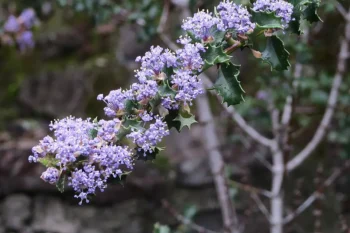
Hollyleaf Ceanothus: A Rare California Gem Worth Protecting
Meet the hollyleaf ceanothus (Ceanothus purpureus), a stunning native shrub that’s as beautiful as it is rare. This California endemic is a true treasure of the Golden State’s natural heritage, but it comes with an important conservation story that every gardener should know.
What Makes Hollyleaf Ceanothus Special?
This perennial shrub earns its common name from its distinctive holly-like leaves with spiny margins that give it a unique texture in the garden. The hollyleaf ceanothus typically grows as a multi-stemmed woody plant, usually staying under 13-16 feet tall, making it perfect for residential landscapes. In spring, it produces clusters of small white to pale blue flowers that create a stunning display against the dark green, spiky foliage.
Where Does It Call Home?
Hollyleaf ceanothus is exclusively native to California, where it naturally grows in chaparral and woodland areas throughout central and southern regions of the state. As a true California native, it’s perfectly adapted to the Mediterranean climate and plays an important role in local ecosystems.
- Species observed
- No observations
A Conservation Alert: This Plant Needs Our Help
Important: Hollyleaf ceanothus has a Global Conservation Status of S2, meaning it’s considered Imperiled due to extreme rarity. With typically only 6 to 20 occurrences and an estimated 1,000 to 3,000 remaining individuals in the wild, this species is especially vulnerable to extinction.
If you’re inspired to grow this remarkable plant, please only purchase from reputable nurseries that propagate from ethically sourced seeds or cuttings. Never collect plants or seeds from wild populations – every individual in nature is precious for the species’ survival.
Why Gardeners Love Hollyleaf Ceanothus
Despite its rarity, hollyleaf ceanothus offers incredible benefits for the right garden:
- Drought champion: Once established, it thrives with minimal water
- Pollinator magnet: The spring blooms attract native bees, butterflies, and other beneficial insects
- Erosion fighter: Perfect for stabilizing slopes and hillsides
- Low maintenance: Requires very little care once settled in
- Unique texture: The spiny leaves add interesting architectural element to landscapes
Perfect Garden Companions
Hollyleaf ceanothus shines in Mediterranean-style gardens, native plant landscapes, and drought-tolerant designs. It’s ideal for:
- Chaparral restoration projects
- Xerophytic (dry) gardens
- Wildlife habitat gardens
- Slope stabilization plantings
- Native plant collections
Growing Conditions and Care
This California native is surprisingly easy to grow when you mimic its natural habitat:
Climate zones: USDA zones 8-10
Sun and soil: Provide full sun to partial shade and well-draining soil. Like most California natives, it prefers acidic to neutral pH and absolutely cannot tolerate soggy conditions.
Water needs: Here’s the key to success – water regularly the first year to establish roots, then cut back dramatically. Avoid summer irrigation once established, as this can actually harm the plant.
Planting and Care Tips
- Best planting time: Fall planting gives roots time to establish before summer heat
- Spacing: Allow adequate room for mature size, typically 6-8 feet apart
- Pruning: Light pruning after flowering helps maintain shape
- Fertilizing: Generally unnecessary – these plants prefer lean soils
- Mulching: Use gravel or rock mulch rather than organic mulches
Supporting Conservation Through Gardening
By choosing to grow hollyleaf ceanothus responsibly, you’re not just adding a beautiful plant to your garden – you’re participating in conservation. Every garden that includes this rare species serves as a genetic repository and helps ensure its survival for future generations.
Remember, the key is sourcing responsibly. Look for nurseries that specialize in California natives and can verify their propagation methods. Your garden can become part of the solution for preserving this remarkable species while enjoying its unique beauty and ecological benefits.
Hollyleaf ceanothus proves that sometimes the rarest treasures make the most meaningful additions to our gardens – when we approach them with the respect and care they deserve.